
The Nature of the Journey by Tracy Chalmers
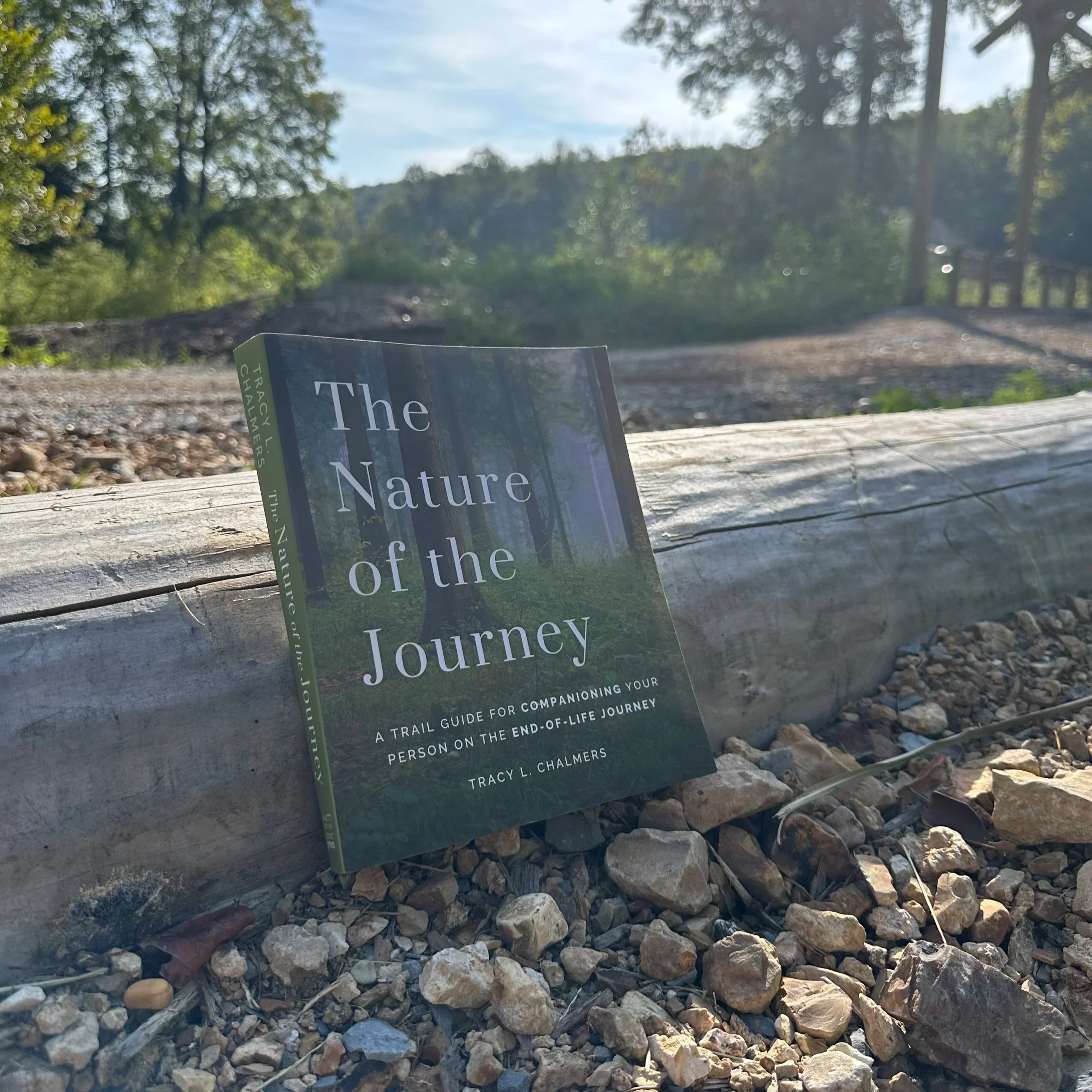
Photo courtesy of Flynn Adgate
I took The Nature of the Journey with me on a weekend retreat because I knew it was exactly the kind of book I wanted to explore somewhere quiet, surrounded by trees and with enough space to really sit with it.
Tracy Chalmers has long been one of my beloved colleagues, another Canadian doula who seems to speak the exact same language of death work that I do. She is wise and generous, kind and sincere, and all of that comes through on these pages.
This book has quickly become one of my go to recommendations for clients and families because Tracy takes what can feel mysterious, frightening, or impossible to understand about dying and gives us another language for it. And it is perhaps the most natural language we have: the language of the senses, the elements, the seasons, and the outdoors.
Rather than asking us to understand dying intellectually, Tracy gently brings us back into our bodies. She reminds us to notice. To feel. To orient ourselves toward what is happening in the same way we might orient ourselves on a walk through unfamiliar woods.
There is something deeply grounding about that approach. Death can pull us into our heads, searching for answers, timelines, signs, and certainty. The Nature of the Journey brings us back to the tangible world: what we can see, hear, touch, smell, and sense around us.
Even through the written word, Tracy manages to embody us.
That is what I love most about this book. It doesn’t try to make dying less mysterious by explaining the mystery away. Instead, it gives us a way to be present inside of it.
This is the kind of book I want within reach when a family asks me, “What is happening?” Not because it offers a clinical explanation of dying, but because it offers something equally necessary: a language for experiencing it.
For doulas, caregivers, families, and anyone trying to understand the landscape of dying, The Nature of the Journey is a beautiful companion. It belongs on the shelf, but perhaps even more importantly, it belongs in our hands when we find ourselves walking this path.