
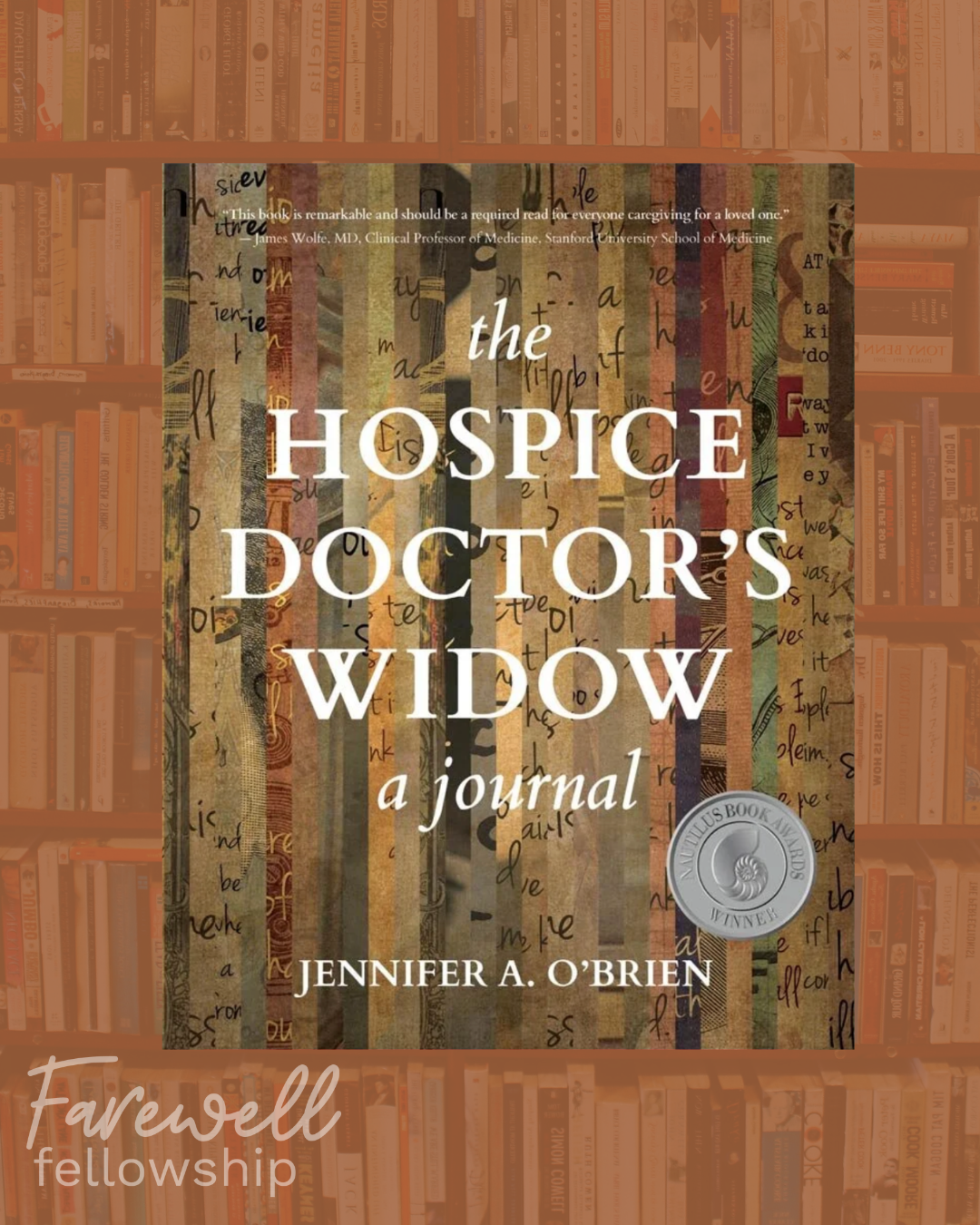
Last year, at the National End-of-Life Doula Alliance’s inaugural gathering, Doulapalooza (a name I still can’t quite embrace), I met Jennifer O’Brien, known throughout the end-of-life community as The Hospice Doctor’s Widow. Before I ever read her book, I experienced the quality that would come to define it for me: her generosity.
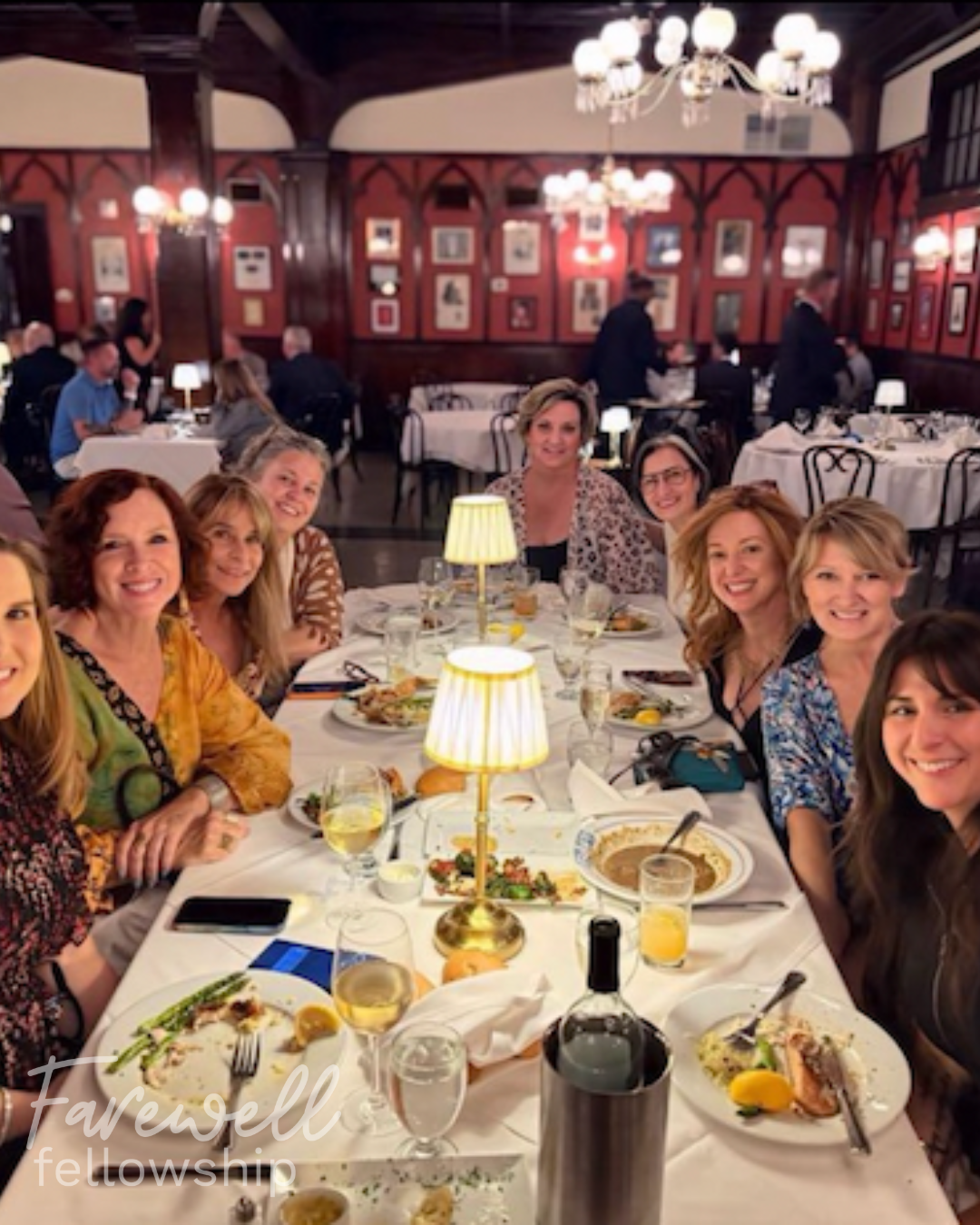
Jennifer welcomed me into her circle with an ease that felt rare. She invited me to dinner at Antoine’s in New Orleans alongside many of the pioneers of the modern death doula movement, writers whose books had quietly shaped my own work for years. As we shared a meal, she was refreshingly candid about closing the conference as keynote speaker. There was no carefully curated expertise, only honesty. For a girl sitting at a table with women whose books she’d dog-eared, highlighted, and occasionally argued with in the margins, that kind of openness was both disarming and deeply welcome.
When Jen finally took the stage at the end of the weekend, that honesty became something transformative. Her story left the room in tears, literal sobs echoed around the ballroom, not because it sought to manipulate emotion, but because it refused to protect itself from it. Then again, she was speaking to a room full of death doulas. We are, almost by job description, a little easier to make cry.
When I returned home, I immediately emailed Jennifer and asked for a copy of The Hospice Doctor’s Widow: An Art Journal of Caregiving and Grief to review for The Farewell Library. It arrived just as I began working with a new client whose husband was dying of cancer. She was doing what so many caregivers do: trying to prepare for a journey that refuses to be planned. It felt less like a coincidence than a quiet nudge, so I left the book on their dining room table during one of our earliest visits.
A few months later, I asked whether she’d finished it. “It stays by my bedside,” she told me, “or it’s in my bag.”
Her husband died last month. When the book was finally returned to me, it carried the quiet evidence of having done exactly what Jennifer intended it to do: accompany someone through anticipatory grief, relieve the isolation of caregiving, and into gently usher into widowhood.
The Hospice Doctor’s Widow is less a memoir than a collection of companion pieces. Through collage art, handwritten reflections, practical wisdom, quippy rants, flashes of humor, and moments of profound heartbreak, Jennifer chronicles her husband’s terminal illness and the uncertain terrain that followed his death. She doesn’t offer a roadmap through grief or promise that suffering will somehow become beautiful. She simply tells the truth about what happened and, in doing so, reminds readers they don’t have to walk this road alone.
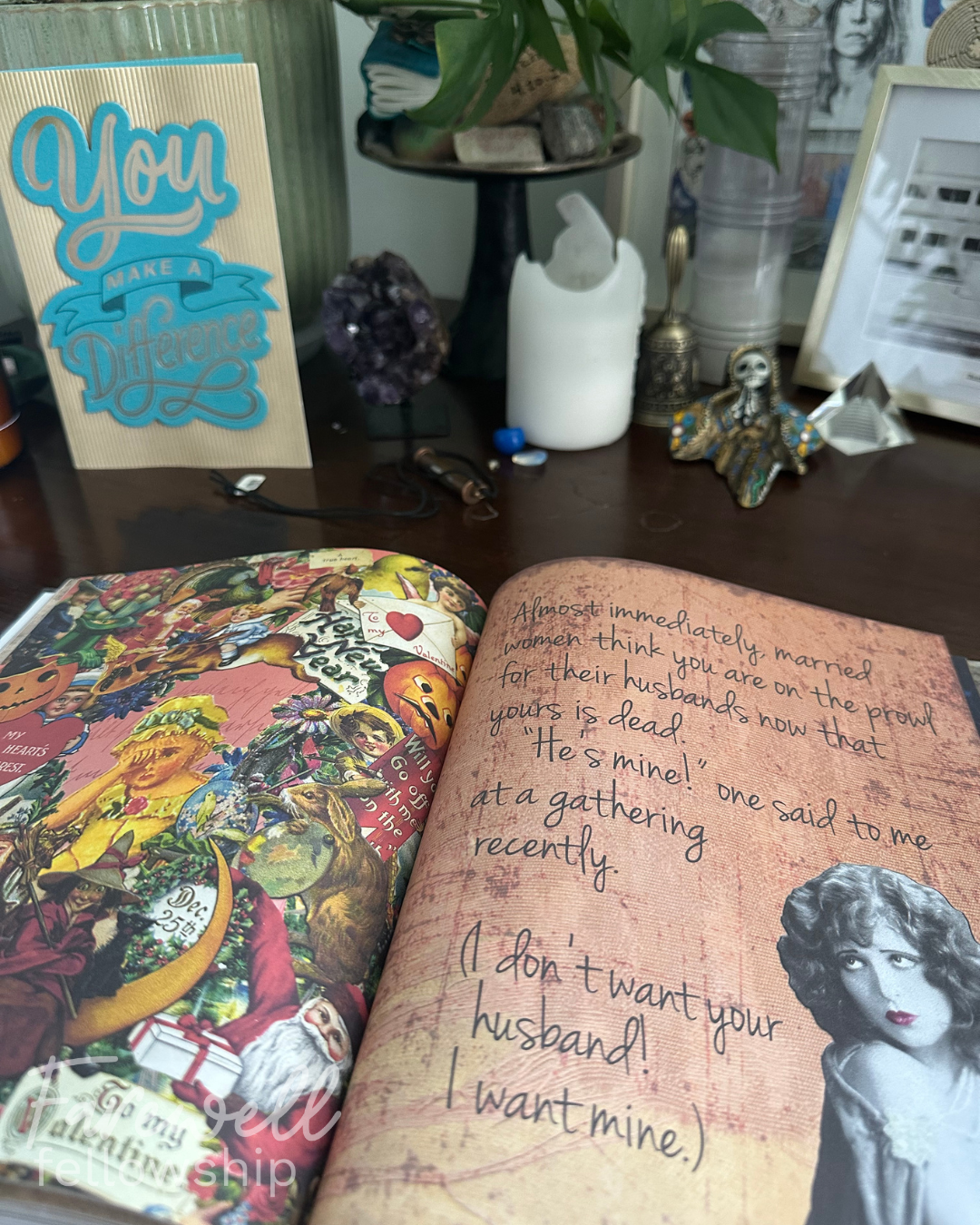
The generosity that marked my first meeting with Jennifer is the same generosity that fills these pages. She welcomed a new face into a circle of old friends, made introductions, and let me see a piece of her heart over dinner. This book feels like that same gesture, an authentic offering of herself because she seems to know no other way to be. In reading it, you begin to feel there is no wrong way to be yourself, either.
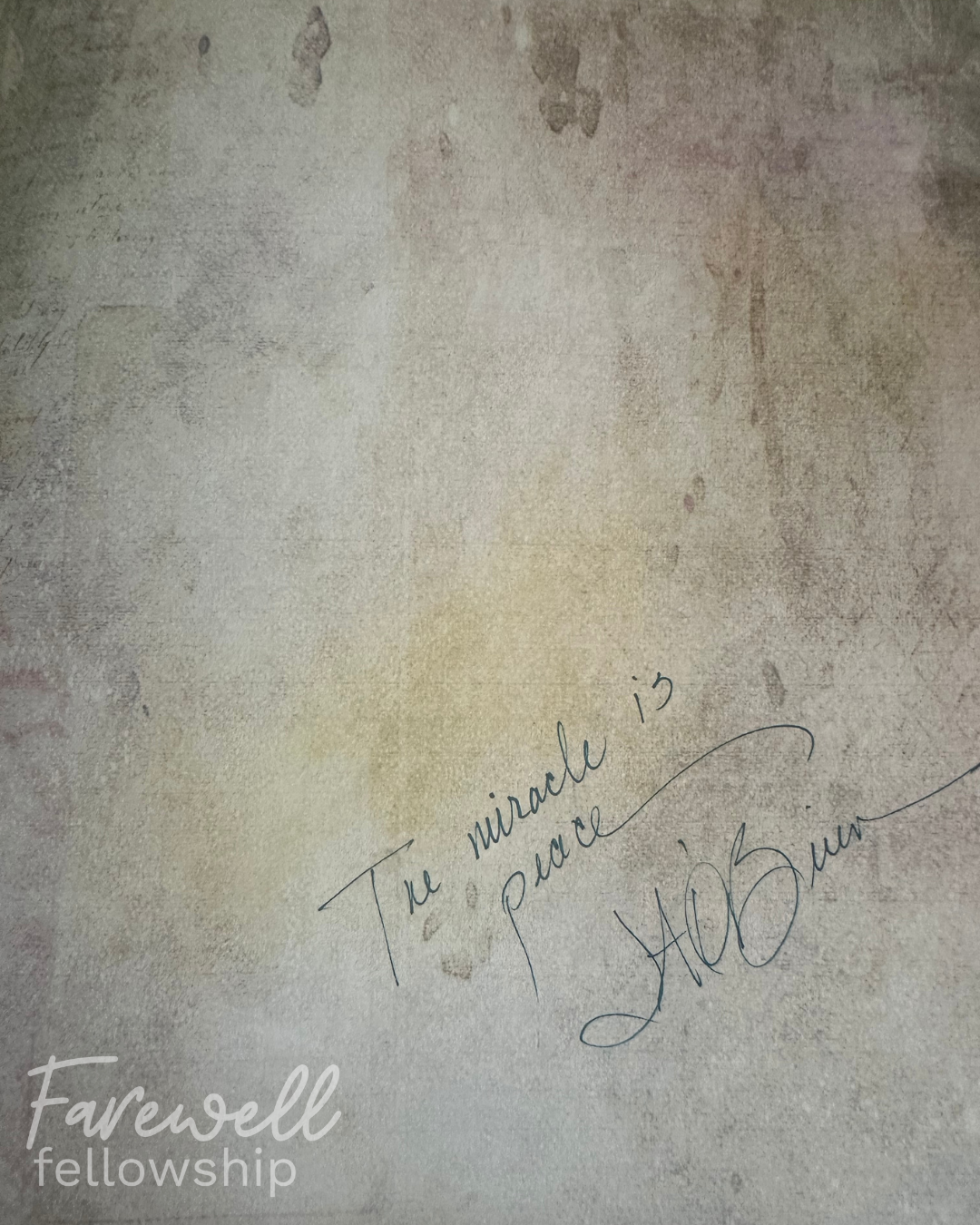
As I read the words of the poem that Jen and Bob shared each morning, and listened again to the folk album Mercy Me that she played at his bedside as he died, I found myself carrying bits of their love story with me. I will forever be changed not only by the way they loved one another, but by the openness with which they’ve chosen to tell that story in service of others. Mary Gauthier’s weathered voice, the gentle teachings of Desiderata, and Jennifer’s inscription in my copy, “The miracle is peace,” have haunted me ever since. I suspect they always will.
If you are looking for a gift for someone caring for a dying spouse, or standing quietly at the threshold of widowhood, I can’t think of a better one.
As Gauthier sings in “Mercy Now”:
We could all use a little mercy now.
May you find a bit of warmth and mercy in Jen’s generosity as I did.
Jade Adgate is a death doula, educator, and advocate. Through her work at Farewell Fellowship, Farewell Education, and Farewell Library, she guides others in exploring mortality and cultivating understanding, reflection, wonder, and care around life and death.