
Children Don’t Process Death in One Conversation
One of the questions I am asked most often is some version of: How do I talk to my child about death?
Sometimes a grandparent is dying. Sometimes a diagnosis has changed the shape of a family. Sometimes a death has already happened and the adults are suddenly trying to figure out how to explain an absence that a child can feel but doesn’t yet understand.
Underneath the question, I often hear another one: What do I say to make them understand?
We want the right words. We want a script. We want to sit down, explain what is happening clearly and compassionately, answer the questions, and somehow get our child safely to the other side of the conversation.
But children don’t process death in one conversation.
Especially when they are young, children tend to understand enormous things in very small pieces. They ask a question, listen to the answer, and go play. They bring it up again three days later while eating cereal. They ask the same question they asked last week. They seem completely unaffected and then suddenly want to know whether Grandma will be able to breathe inside the casket.
This can be confusing for adults because we tend to think that if we’ve explained something once, the child now knows it.
But knowing that someone is going to die and understanding what death actually means are two very different things.
Children Need Time to Understand What “Dead” Means
Think about how much information is contained in a sentence as simple as: Grandpa is going to die.
An adult hearing those words has decades of experience attached to them. We understand absence. We understand funerals and bodies and cemeteries. We understand that there will be a last conversation, a last birthday, a last time walking through the front door. We know that death means Grandpa won’t answer the phone again.
A young child may know almost none of that.
If they have never experienced a significant loss, death is largely an abstraction. They may know the word dead. They may have seen a dead bug or heard about death in a movie. But they may not yet understand permanence. They may not understand what happens to a person’s body. They may not understand where that person will go, what will happen next, or how their own life will change.
And when children don’t have information, their imaginations are very good at filling in the blanks.
Those blanks can become boogeymen.
This is one reason I believe death literacy begins long before a crisis. We don’t need to unload the entire reality of mortality onto a five-year-old. We simply need to be willing to answer the question that is in front of us, truthfully and gently, and then remain available for the next one.
The younger the child, the smaller the pieces may need to be, and the conversation may take a very long time.
A Book That Understands the Assignment
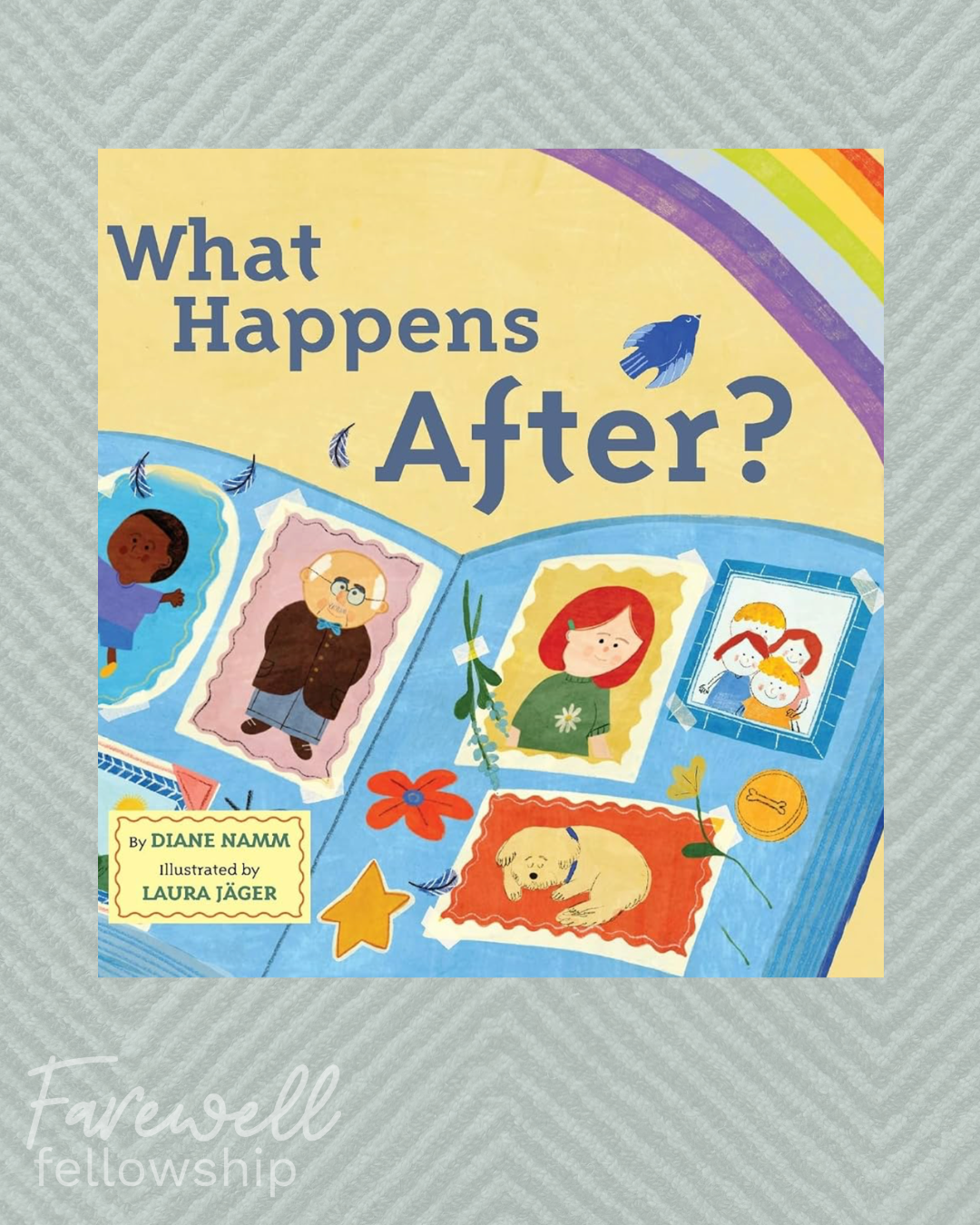
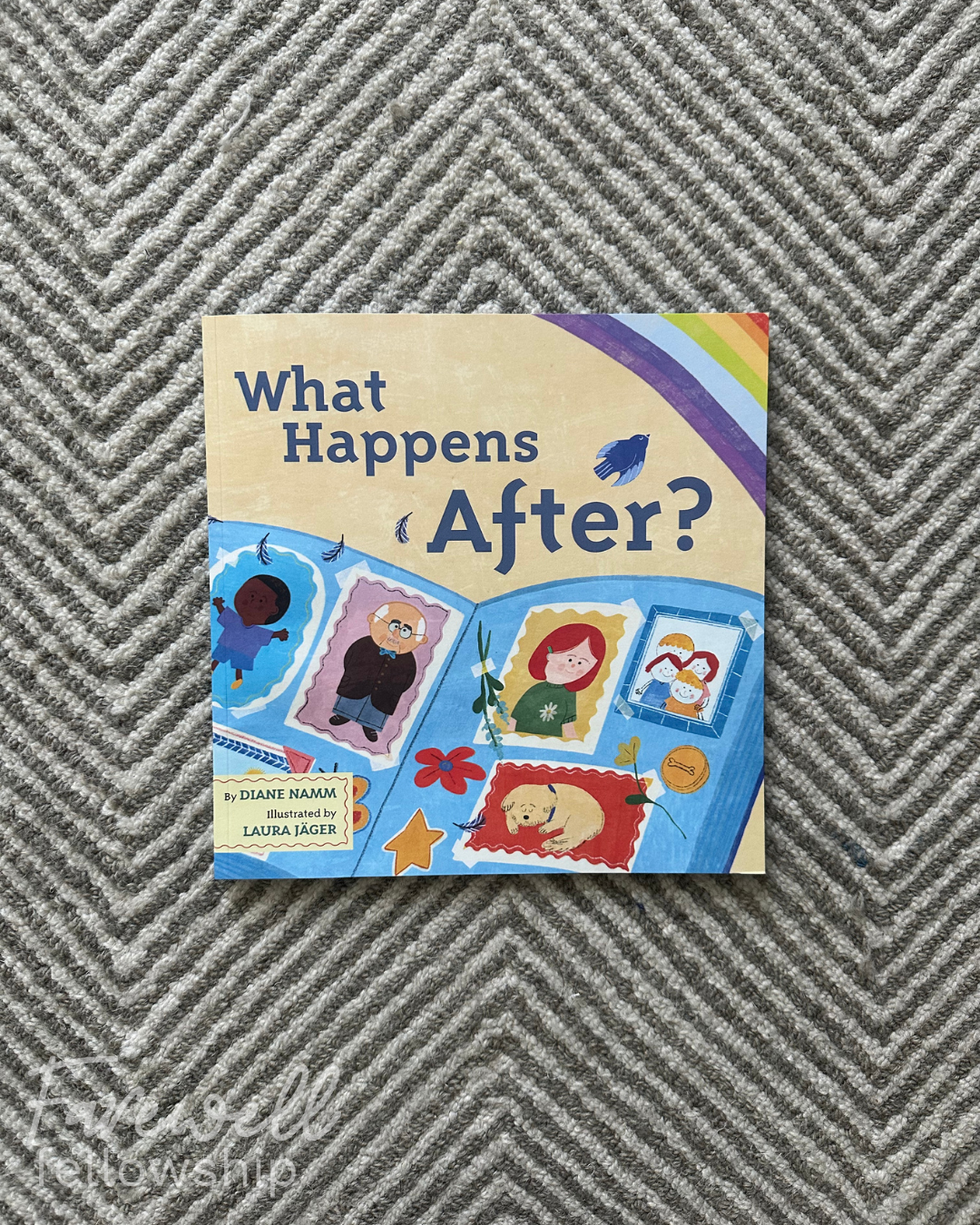
This is what I appreciated most about What Happens After by Diane Namm, illustrated by Laura Wager.
It doesn’t try to explain everything; instead, it gives children a place to begin.
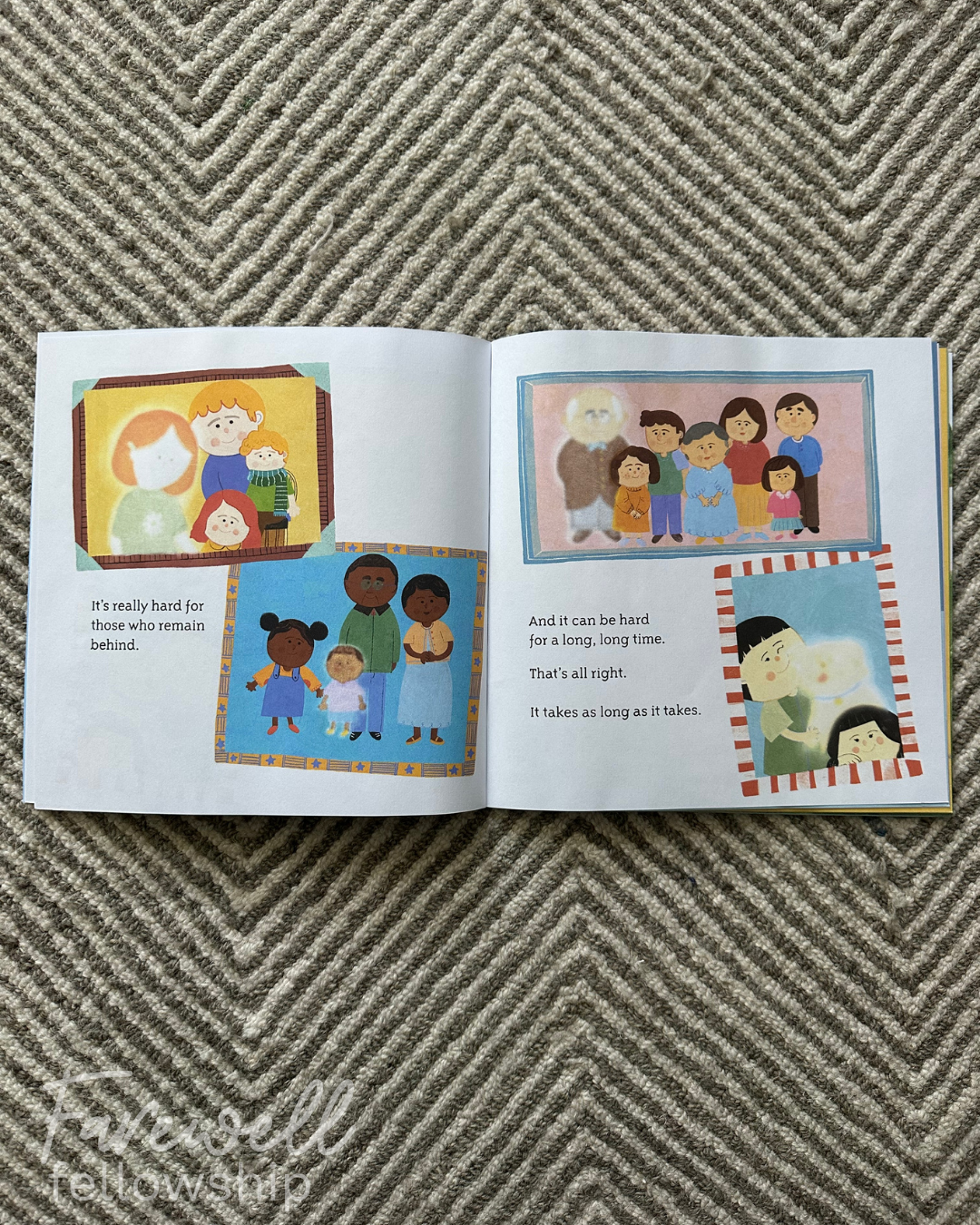
The book is made up of short, bite-sized sentences paired with sweet, accessible illustrations. I’d place it primarily in the early elementary years (roughly kindergarten through second grade) although some preschool-aged children will certainly be ready for it. The language is simple enough that early readers may also be able to return to it independently.
What the book does particularly well is answer the very literal question in its title: What happens after someone dies?
That question may sound enormous to us. For a child, though, it can be incredibly practical. Will I see them? Where will they be? What happens to their body? Are they just gone? What am I supposed to do with all the love I still have for someone who isn’t physically here anymore?
What Happens After begins helping a child understand the loss of access to the earthly body and physical presence of someone they love. It introduces that reality gently rather than hiding from it.
At the same time, the book leaves room for continuing connection. It introduces ideas of signs, spirit, memory, and ongoing communication without attaching them specifically to Christianity, or to any other religious tradition.
I appreciated that openness.
Families believe very different things about what happens after death. Children eventually have to find language for those questions too. This book leaves enough room for parents and caregivers to place their own beliefs alongside the story rather than having a particular theology handed to them.
Death Doesn’t Only Mean Grandma and Grandpa
I also appreciated the range of relationships represented throughout the book.
There are parents and children, grandparents, siblings, and pets. Multiple races and family experiences are represented in Laura Jager’s illustrations.
That matters because children’s first encounters with death are not always the elderly grandparent we tend to imagine when we create resources about childhood grief. Sometimes it’s a pet, sibling, or parent.
And sometimes the first death a child encounters isn’t happening in their own family at all. They may simply be trying to understand why their friend’s mother died or why the neighbor’s dog isn’t there anymore.
Books give children a way to encounter these realities at a slight distance. They can point to the page instead of themselves. They can ask about the child in the picture when what they’re really trying to understand is their own fear. They can close the book and go play when they’ve had enough. And they can ask you to read it again when they’re ready for another piece.
The Goal Isn’t to Finish the Conversation
I think this is where adults sometimes put unnecessary pressure on ourselves. We imagine that talking to children about death requires some solemn family meeting in which we summon the perfect words.
Sometimes that conversation is necessary.
But much of death literacy is built somewhere much less dramatic. It’s built while reading a book together, holding a small child in your lap and being present while they consider a concept for the first time, in the safety of their parent. It’s built when a child finds a dead bird in the yard or when they suddenly ask from the backseat whether you’re going to die someday. It’s built when they want to know why Grandpa’s body will be at the funeral if Grandpa isn’t in it anymore.
We answer what they’re actually asking. We use concrete language. We tell the truth at a size they can carry. And then we let them go back to being children. Later, we do it again.
That is why I would particularly recommend What Happens After to families facing an anticipated death. If a child understands that someone they love is going to die, this book can become one of the guides you use while the enormity of what that means slowly settles in.
You don’t have to hand them the entire reality at once. You can read a few pages. Answer a question. Put the book down. You can come back tomorrow. Or next week. Or after the death, when a question that didn’t exist before suddenly does.
Because the goal isn’t to have the death talk. The goal is to create a relationship in which death is something your child knows they can talk to you about.
What Happens After doesn’t finish that conversation. It helps us begin one.
And with children, beginning (and remaining willing to return to it) may be the most important part.
Jade Adgate is a death doula, educator, and advocate. Through her work at Farewell Fellowship, Farewell Education, and Farewell Library, she guides others in exploring mortality and cultivating understanding, reflection, wonder and care around life and death.