
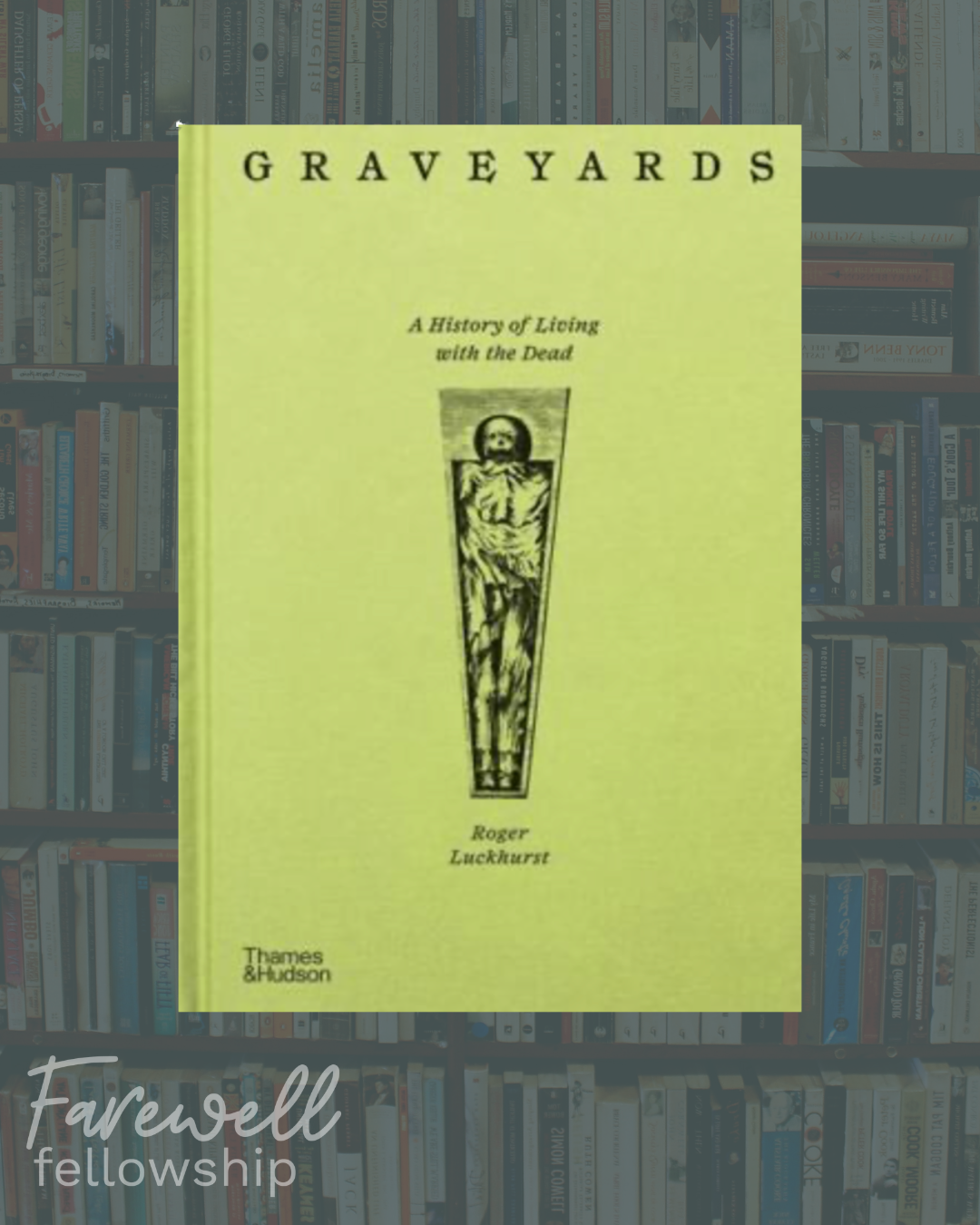
One of the greatest gifts of death work is learning to see the traces of mortality woven throughout everyday life. Cemeteries, memorials, churchyards, mausoleums, and burial grounds are all around us, yet many of us rarely stop to consider what these spaces reveal about the societies that created them.
That is precisely what Roger Luckhurst invites readers to do in Graveyards: A History of Living with the Dead.
Part history, part cultural exploration, and part meditation on remembrance, this richly researched book examines humanity's evolving relationship with burial, memorialization, and the places where the dead reside. Rather than focusing solely on cemeteries, Luckhurst takes readers on a sweeping journey through centuries of death culture, exploring everything from ancient burial practices and churchyards to Victorian cemeteries, war memorials, catacombs, grave robbing, memorial architecture, and contemporary approaches to remembrance.
What makes this book particularly compelling is its ability to demonstrate that burial places are never simply repositories for the dead. They are cultural artifacts that reveal how communities understand religion, family, power, memory, grief, and the afterlife. Through each era and location, Luckhurst shows how the treatment of the dead reflects the values of the living.
As a death doula, I was especially drawn to the broader questions the book raises about our relationship with memorial spaces. While this is not a practical guide to end-of-life care or a book focused specifically on grief support, it offers important context for anyone interested in death literacy. Understanding how different cultures and generations have cared for and commemorated their dead can deepen our appreciation for the choices available to us today.
The book is filled with fascinating historical details and unexpected connections. Readers will encounter stories of ancient burial grounds, elaborate Victorian cemetery design, public health concerns that shaped burial practices, memorials created in response to war and tragedy, and the enduring human desire to create places where memory can be held. Luckhurst also explores the ways graveyards have appeared in literature, art, folklore, and popular culture, reminding us that our fascination with the dead extends far beyond the cemetery gate.
One of the strengths of Graveyards is its breadth. Rather than presenting a narrow history of cemeteries, Luckhurst examines the many ways societies have lived alongside their dead. The result is a book that feels both scholarly and accessible, offering readers countless opportunities to reflect on how death shapes communities, landscapes, and collective memory.
For those of us working in end-of-life care, books like this help place modern death practices within a much larger historical context. They remind us that today's conversations about home funerals, green burial, memorialization, and community-based death care are part of a much longer human story.
Whether you are a death doula, hospice professional, funeral director, cemetery enthusiast, historian, or simply someone who enjoys exploring the cultural dimensions of mortality, Graveyards offers a thoughtful and engaging read.
Recommended For: Death doulas, hospice workers, funeral professionals, cemetery enthusiasts, death studies students, historians, and curious readers interested in the cultural history of death and remembrance.
Rating: 4.5 out of 5 stars
Graveyards earns a place on The Farewell Library shelf for its sweeping exploration of how humans have cared for, commemorated, and lived alongside their dead across cultures and centuries. While it is not a practical guide to end-of-life planning or caregiving, it is a fascinating contribution to death literacy and an excellent resource for anyone seeking a deeper understanding of the history, symbolism, and cultural significance of burial places. This is a book that will leave you looking at cemeteries—and perhaps your own relationship with remembrance, with fresh eyes.