
Dementia Reveals What We Think Makes a Person Valuable
One thing I hear often from my death doula students is this: “I don’t really enjoy sitting with dementia patients.”
And honestly, I understand.
Dementia can feel disorienting for new doulas. The conversational reciprocity that many of us unconsciously rely upon disappears. There may be repetition, confusion, agitation, silence, wandering, emotional unpredictability, or long stretches where it seems like nothing is happening at all.
Many volunteers and doulas leave those visits feeling uncertain: Did I help? Did they even know I was there? Did we connect?
But I keep thinking about my very first clients as a death doula. Almost all of them had dementia.
And what they taught me fundamentally reshaped the way I understand presence, communication, and even personhood itself.
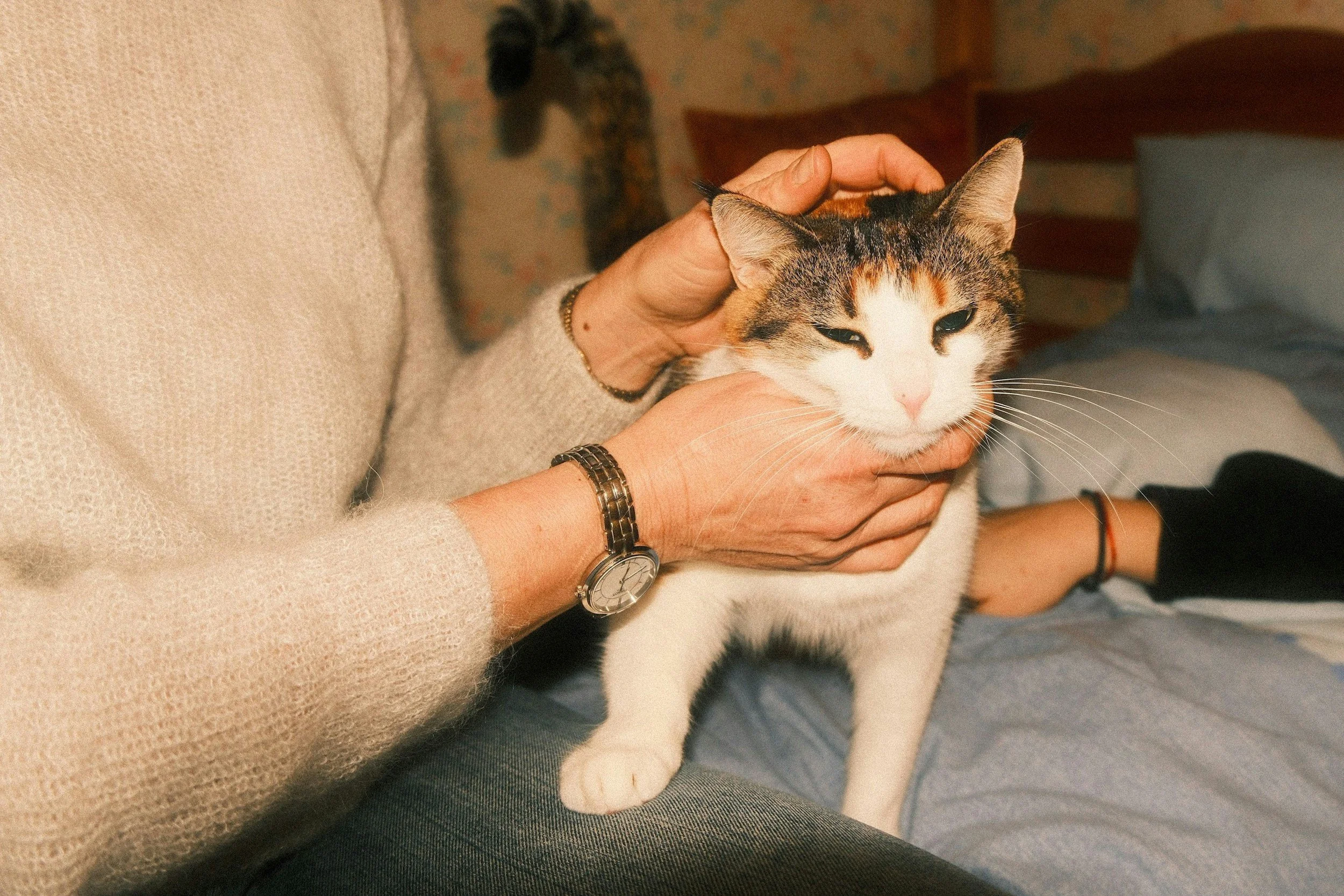
Ms. Maggie had end-stage dementia so advanced that if her body slumped to one side in the hospital bed, she would remain there until someone repositioned her. She was nonverbal. Most days, she sat blinking quietly in one position for hours at a time.
At first, I thought there was very little I could offer her.
But over time, Ms. Maggie became one of my greatest teachers.
Because with her, I realized something profound: when language disappears, the nervous system becomes the conversation.
Her room became the safest place imaginable for me to experiment with forms of presence that I had once doubted or dismissed. I tried everything gently and curiously:
music on the Bluetooth speaker, silent meditation, reciting the rosary from her bedside, reading aloud, flipping through her photo albums of the travels across the world she’d embarked upon, baby dolls that looked real, soft touch and warm rags, a purring cat toy placed in her lap.
And slowly, patterns emerged.
When I placed rosary beads in her hands and prayed aloud, her fingers clicked through the beads at the exact pace of the prayers, as though the rhythm still lived somewhere deeper than conscious memory. When I sang old Catholic hymns, tears would stream down her face. When I’d put a warm, damp rag to her face, her eyes would blink, and her eyebrows would raise as if she was feeling joy in the freshness. The vibrating cat toy softened her entire body when it rested in her lap.
Ms. Maggie taught me that memory is not only cognitive. The body remembers. The nervous system remembers. The soul, perhaps, remembers too.
Dementia forced me to stop privileging verbal communication as the only meaningful form of relationship.

Then there was Ms. Lilah.
Her dementia expressed itself differently. She was always trying to leave.
Even while in her dying days, she would sit upright on the edge of her hospital bed for hours, refusing to lie down. Her exhausted abdominal muscles would visibly tremble from the effort of holding herself upright, one hand clutching the bed rail as though she were preparing to depart at any moment.
One night, to let her daughter rest, I sat beside her in the dark with my thigh pressed gently against hers, my shoulder touching hers. Eventually, she sagged against me with exhaustion.
For a long while, we just stared ahead together in silence.
Then she spoke.
“This is a long train ride,” she said.
I nodded.
After a while, I told her, “If you want to rest, I’ll wake you when we reach your stop. And later, you can do the same for me.”
She looked up at me with surprise, then nodded.
And finally, she allowed herself to lie down.
Dementia has taught me that we have to meet people where they are. Not where we insist reality should be. Not where we are most comfortable. Where they are.
And then there was Mr. Greg.
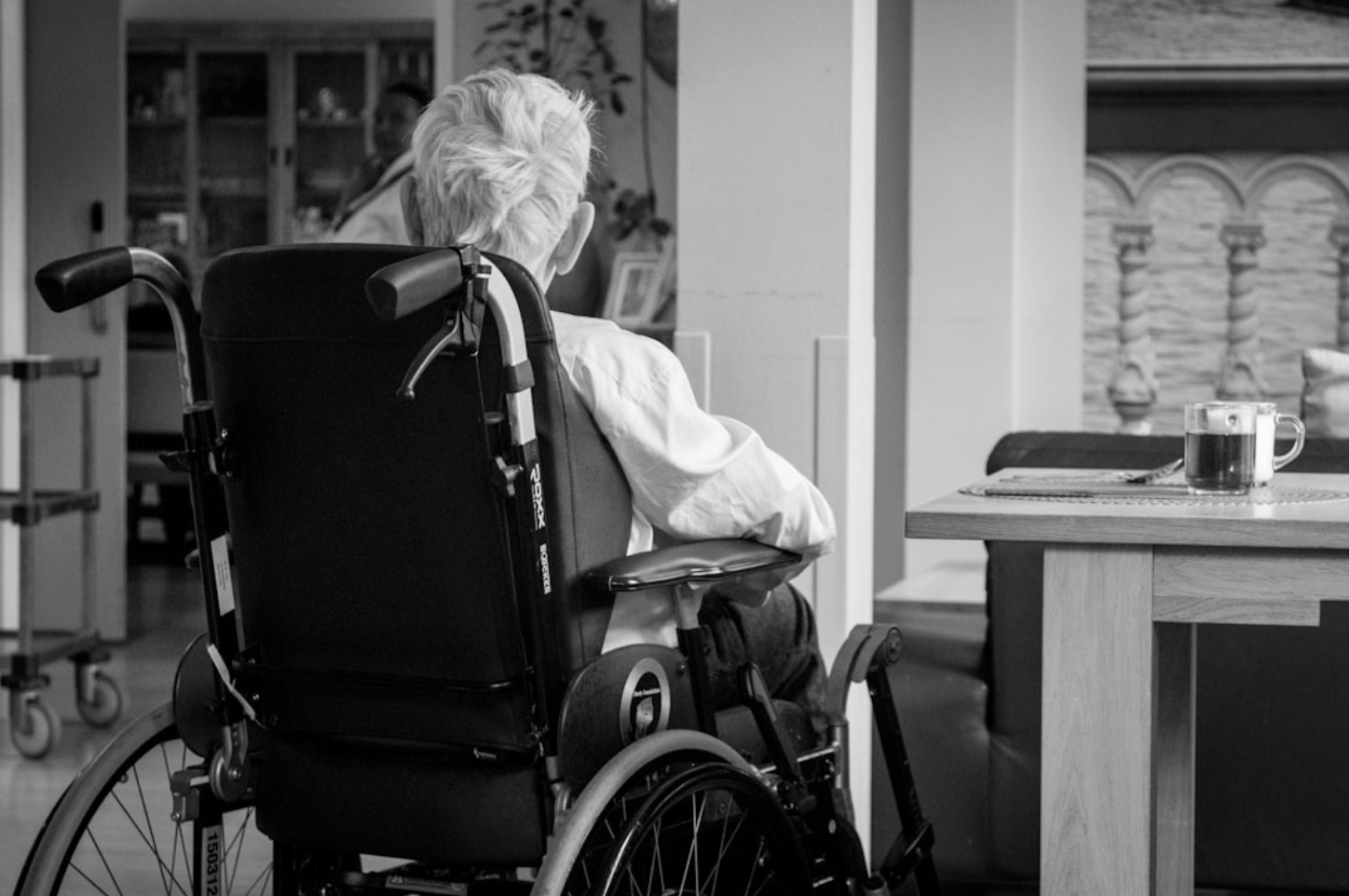
Mr. Greg had once been a mayor, and some part of him never stopped being one. He dressed like it, too. Every week when I visited, he sat in his wheelchair buttoning and unbuttoning his cardigan with immense concentration.
During our first meeting, I reached instinctively to help him.
He slapped my hand away. Fair enough.
His daughter asked if I would read to him because he had always loved books. At first, I simply brought whatever novel I happened to be reading myself. But after a few visits, I began to suspect something important: though he rarely responded outwardly, some deep attentive part of him was still listening.
So I went to the library and intentionally chose a wilderness survival novel I thought he might enjoy: blizzards, cabins, danger, endurance.
One afternoon, after I finished reading a chapter and stood to leave, Mr. Greg suddenly looked up at me and said, clear as day: “We never thought she’d survive the flu, and look at her now. Ha!”
He was referencing a scene from several chapters earlier, which I’d read weeks before.
I still don’t know how to explain it. And maybe that’s part of the point.
Dementia reveals how little we truly understand about consciousness, memory, identity, and relational presence.
But more than anything, dementia reveals what our culture believes makes a person valuable.
We live in a society that equates worth with cognition. So much of what we value in one another hinges upon our clarity, productivity, recognition, and coherence.
And when those things begin to disappear, many people unconsciously begin relating to dementia patients as though the person themselves is disappearing too.
But sitting bedside taught me something different. Maybe what disappears is the way the person is in a relationship and how they communicate from this new place.
A person does not cease to deserve tenderness when they stop being recognizable to us.
And perhaps one of the deepest invitations of dementia care is this:
Can we remain in a relationship with someone who can no longer consistently affirm our identity?
Can we still offer dignity without reciprocity?
Can we stay present without being rewarded by conversation, memory, gratitude, or recognition?
Can we communicate with our nervous systems and our presence instead of our words?
As death doulas, this matters deeply.
Because dementia strips us of many of the traditional tools we rely upon in caregiving and leaves us with something much more vulnerable: tone, energy, and presence.
And in that stripped-down place, we begin to discover that communication was never only verbal to begin with.
Sometimes the most profound forms of love happen beneath language entirely.
Free Resource for Caregivers & Doulas
Because dementia care can feel emotionally overwhelming and deeply disorienting, I created a free companion resource to go alongside this essay:
A Death Doula’s Guide to Sitting with Dementia
A gentle resource for caregivers, hospice volunteers, and death doulas navigating dementia care with more presence, clarity, and compassion.
Inside, I cover:
how to communicate without unnecessary correction
nervous system regulation in dementia care
emotional truth vs factual orientation
ways to create safety through rhythm, touch, music, and ritual
common caregiver emotional experiences
reflection prompts for doulas and family members
If you’ve ever left a dementia visit wondering:
“Did I actually connect with them?”
This resource is for you.
Because often, the deepest forms of connection are happening beneath language entirely.
Jade Adgate is a death doula, educator, and advocate. Through her work at Farewell Fellowship, Farewell Education, and Farewell Library, she guides others in exploring mortality and cultivating understanding, reflection, wonder, and care around life and death.