
Joan Didion’s “Blue Nights” and the Sharp Edge of Grief
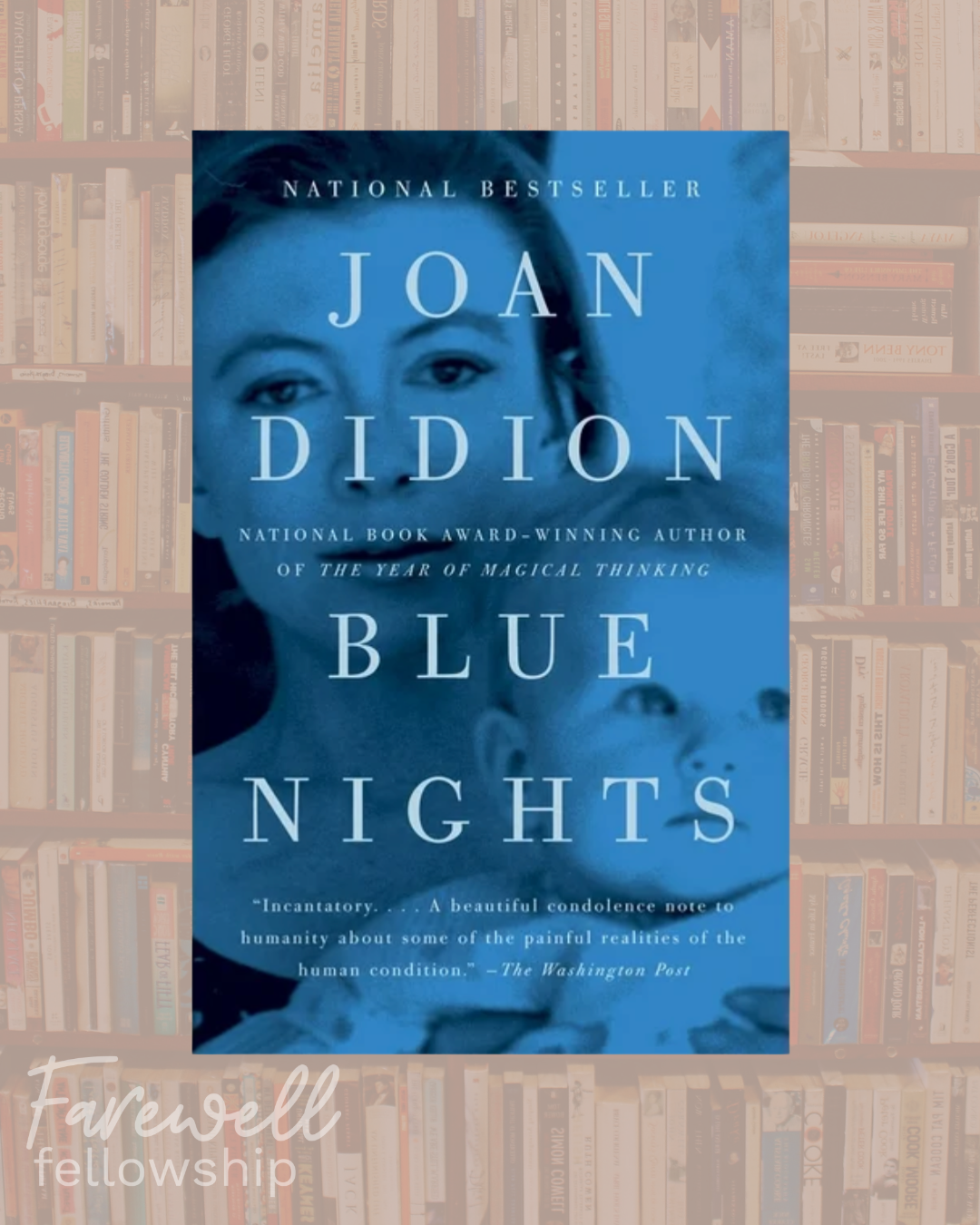
Joan Didion (1934 - 2021) was one of the defining American essayists of the twentieth century, known for her precise, unsentimental prose and her ability to turn personal disorientation into cultural diagnosis. Blue Nights, published when Didion was seventy-seven, is often read alongside The Year of Magical Thinking as part of her extended reckoning with grief. The earlier book centers largely on the death of her husband, John Gregory Dunne. Blue Nights turns toward something even more destabilizing: the death of her daughter, Quintana Roo Dunne, alongside Didion’s growing awareness of her own aging and proximity to death.
If The Year of Magical Thinking is about the shock of grief, Blue Nights is about what happens when grief stops being an event and becomes a condition of life. It is what remains when there is no longer an “after,” only continuation.
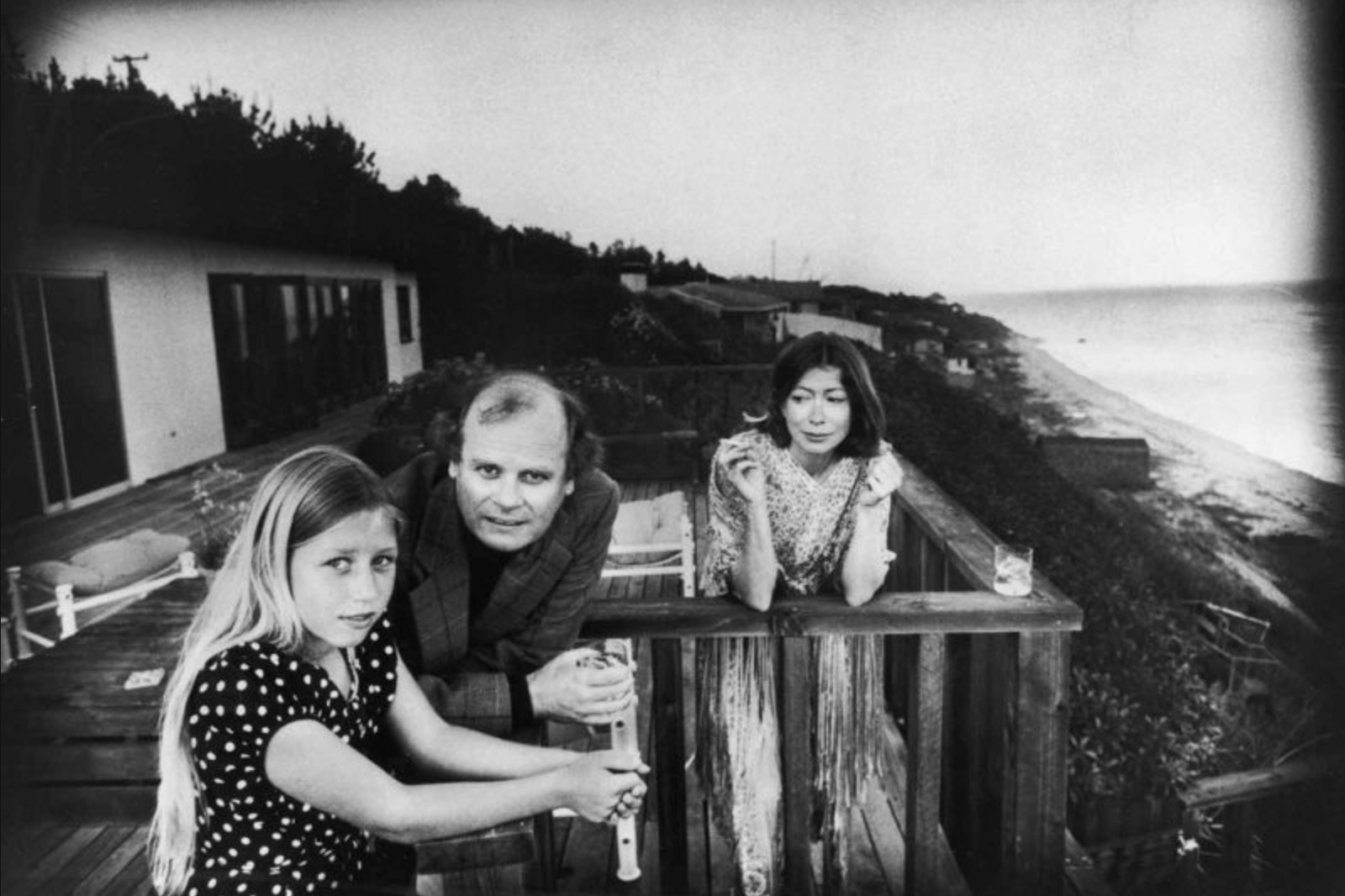
Joan Didion with her family. Photo courtesy of Netflix.
Didion wrote Blue Nights in the long aftermath of compounded loss that reshaped her relationship to time, continuity, memory, and narrative itself. It was published roughly nine years before her own death and seven years after the death of her daughter. The book feels less like a retrospective account than a continuation of that altered state of perception grief may offer us, written from inside the lingering effects of illness, aging, and the collapse of assumed futures.
In reflecting on its title, Didion turns to the quality of “blue nights” themselves: a twilight that can feel expansive and almost held in place, while also carrying the quiet recognition that this suspension is already part of fading.
“This book is called “Blue Nights” because at the time I began it I found my mind turning increasingly to illness, to the end of promise, the dwindling of the days, the inevitability of the fading, the dying of the brightness. Blue nights are the opposite of the dying of the brightness, but they are also its warning.”
What makes the book so arresting is that it refuses many of the narrative structures we now tend to expect from grief writing. Contemporary memoir often moves, even subtly, toward resolution: toward meaning-making, insight, or some form of emotional coherence. Blue Nights does not offer that movement. Instead, it stays inside the instability itself, as though refusing to translate experience into something more easily consumable.
That refusal is both thematic and structural. It shows up most clearly in the way Didion handles memory. Again and again, she returns to the question of what memory actually is when it is no longer attached to a living presence, and whether it can function as consolation at all.
“You have your wonderful memories,” people said later, as if memories were solace. Memories are not. Memories are by definition of times past, things gone. Memories are the Westlake uniforms in the closet, the faded and cracked photographs, the invitations to the weddings of the people who are no longer married, the mass cards from the funerals of the people whose faces you no longer remember. Memories are what you no longer want to remember.”
In this framing, memory is not restorative. It does not repair continuity; it documents its break. Objects, photographs, and remnants of a life do not soften absence but make it more visible, more concrete, more difficult to reinterpret.
And this is what I kept noticing, as I read this as a death doula: how unmediated this experience remains. There is no effort to translate grief into a therapeutic arc, no attempt to smooth its edges into something that can be learned from or completed. The loss of her daughter is not positioned as a chapter within a larger emotional journey; it is a persistent gravitational force. Everything in the book bends toward it, but nothing resolves it.
To understand why this feels so striking, it helps to slow down and name what Didion resists: the cultural expectation that grief must eventually become narratively usable. That it should clarify, redeem, or stabilize a life. Instead, she allows it to remain disorienting.
From there, the book’s emotional terrain becomes easier to see.
The hospital scenes, particularly in the ICU, are an extension of this same refusal. Didion writes about medical spaces with a kind of clinical clarity that anyone who has spent time at the bedside of a seriously ill patient will recognize. The writing does not heighten or dramatize what is happening; it stays remarkably restrained. And it is precisely that restraint that makes it so difficult to read. The absence of interpretive framing leaves the reader inside the experience without protection.
In other words, nothing is explained away. And so everything is felt more directly.
That same dynamic carries into how Didion engages with the act of being read. She anticipates critique throughout the book, especially around questions of privilege and perspective, and she addresses those critiques directly rather than allowing them to remain implied. There is a kind of refusal here to be turned into a symbol: of grief, of aging, of motherhood, of affluence, or of loss “done right” or “done wrong.”
She remains insistently specific to her own experience, even when that specificity makes the text less comfortable for the reader.
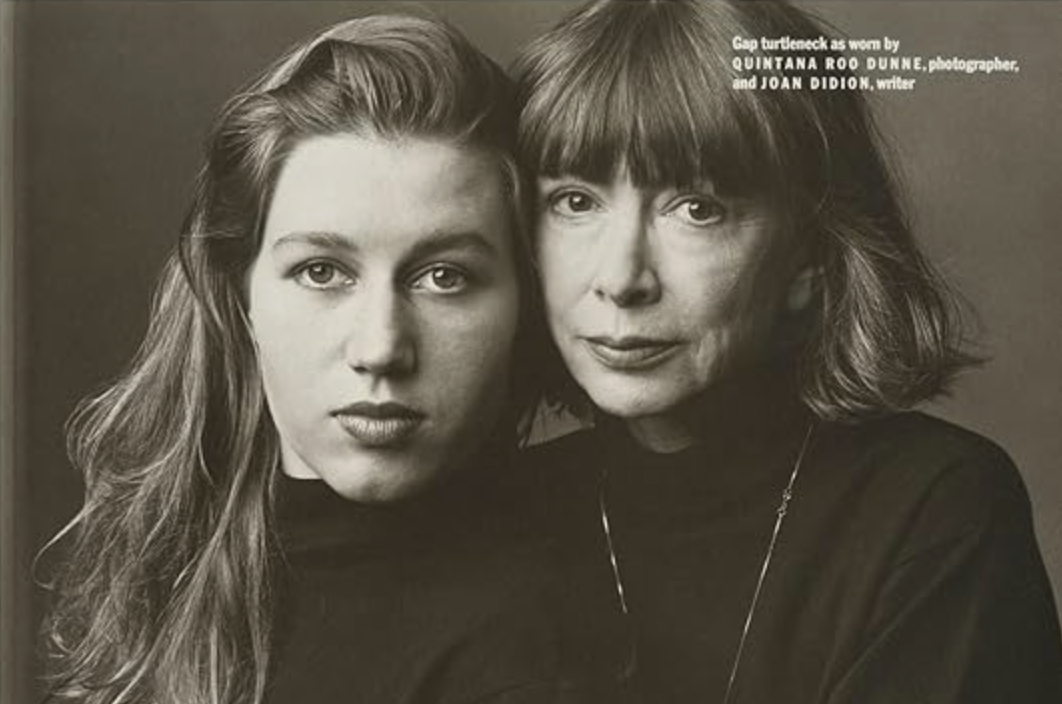
Didion’s approach to aging carries the same refusal that defines her approach to grief: she does not soften it, aestheticize it, or convert it into a narrative of wisdom or surrender. Where contemporary writing on aging often leans toward acceptance, grace, or the quiet reframing of decline as a kind of earned clarity, Didion resists those consolations. She does not “go gently” into aging, nor does she locate charm in its diminutions. Instead, she writes from inside its disorientation: the increasing awareness of fragility, the shifting relationship to competence and memory, the subtle but persistent erosion of certainty about one’s own continuity.
“I hear a new tone when acquaintances ask how I am, a tone I have not before noticed and find increasing distressing, even humiliating: these acquaintances seem as they ask impatient, half concerned, half querulous, as if no longer interested in the answer.
As if all too aware that the answer will be a complaint.
I determine to speak, if asked how I am, only positively.
I frame the cheerful response.
What I believe to be the cheerful response as I frame it emerges, as I hear it, more in the nature of a whine.
Do not whine, I write on an index card. Do not complain. Work harder. Spend more time alone.”
Reading Blue Nights as a death doula, I find myself less interested in what it “says” about grief or aging and more interested in how it holds the reader inside both. Joan Didion does not move away from instability or teach us how to transcend it, accept it, or surrender to it. Instead, she shows us what it is to remain inside it for as long as it persists: without resolution, without narrative relief, without the comfort of meaning-making.
Like the title itself, she holds us in a particular light: one that makes the world appear briefly luminous and still beautiful, while never letting us forget that this brightness is inseparable from what is already beginning to end.
Jade Adgate is a death doula, educator, and advocate. Through her work at Farewell Fellowship, Farewell Education, and Farewell Library, she guides others in exploring mortality and cultivating understanding, reflection, wonder, and care around life and death.