
5 Things I Wish Everyone Knew About Hospice
About 75% of the people who hire me do so before they enroll in hospice care.
I’ve spent a lot of time wondering why.
Early in my career as a death doula, I volunteered within the hospice system, assuming they might refer families who needed additional support. (Spoiler: they didn’t.) Over time, I’ve come to a different understanding:
Most people seek me out before hospice because they don’t understand the system and they want a guide to help them navigate it.
After seven years and more than 400 volunteer hours within hospice, I’ve come to know the system well. These are the five things I wish everyone understood.
1. Hospice is not full-time care
This is the most common (and most difficult) misunderstanding.
Many hospices advertise “24/7 support,” which often leads families to believe someone will be physically present around the clock. In reality, hospice provides access to a 24/7 triage line, not continuous in-home care.
Hospice is a collection of scheduled services delivered where you live. Typically, this includes:
A registered nurse visiting about once per week for 30–45 minutes
A hospice aide providing personal care (often weekly)
A social worker and chaplain checking in about once per month
As a patient declines, visits may increase; but in my experience, it is rare for hospice staff to visit more than once per day.
The nurse becomes your primary liaison, communicating with a hospice physician (whom many patients never meet). That nurse is your main point of contact for medical needs.
The reality is this: families are responsible for full-time care. Whether that care is provided by loved ones or hired privately, it is not covered by hospice and many families are unprepared for this.
2. Hospice is usually provided at home
Many people believe hospice is a place. In most cases, it’s not.
Hospice began as a physical location, most notably with Dame Cicely Saunders’ St. Christopher’s Hospice in 1967. But in the United States, hospice has largely shifted to a home-based model because it is more cost-effective.
Today, most hospice care happens wherever the patient lives.
Inpatient hospice facilities do exist, but they are limited. For example, in Middle Tennessee, there are only a couple of residential hospice units (2 facilities with about 40 beds combined, both owned by the same organization) but there are dozens of homecare agencies. If a patient requires intensive symptom management, they are often transferred to a nursing home rather than a dedicated hospice facility.
Even when a hospice has its own inpatient unit, beds are not guaranteed.
This is an important consideration when choosing a provider: If inpatient care becomes necessary, what setting are you comfortable with?
3. Hospice is usually low or no cost
Hospice is typically covered by Medicare, Medicaid, or private insurance. This means core services (along with medical equipment) are often provided at little to no cost.
However, there are trade-offs.
Hospice care is focused on comfort, not cure. Once enrolled, treatment shifts away from curative measures. That means that curative care is not covered by hospice (occupational therapy, physical therapy, ongoing scans or tests, for example).
Additionally, because hospice operates within large medical systems, the equipment and supplies provided are often basic. Families are sometimes surprised by limitations of dated equipment(“Why are the oxygen tanks so loud!?”), and certain comfort items may not be covered (e.g. the external catheter’s many of my female clients prefer).
And while hospice staff provide valuable support, they are often responsible for many patients at once. If you need more time, presence, or specialized care than the system allows, those services must be privately paid.
4. Hospice is a medical system
Hospice began as a movement to humanize dying. Today, it functions as part of the broader healthcare system.
That means care is shaped by schedules, staffing constraints, and regulatory requirements.
Even the most compassionate providers are working within these structures. Visits may be brief. Providers may run late. Staff turnover can disrupt continuity of care.
For patients and families, this can feel very different from the personalized, deeply present care they may be hoping for.
There are also many procedural boundaries due to Medicare regulations; everything from how care is delivered to how staff present themselves. These details may seem small, but they reflect a larger truth: hospice is no longer a grassroots community model. It is an institutional one.
5. Hospice is often started too late
Although patients are eligible for months of hospice care, most enroll only in the final days or weeks of life.
This delay often comes from a shared belief, among both families and clinicians, that hospice means death is imminent.
As a result, conversations happen late.
Many clients ask me, “Am I ready for hospice?” I often respond: If you died within the next year, would you be surprised?
If the answer is no, it may be time to consider it.
In an ideal world, doctors would guide these conversations. But many are trained to extend life, not to recognize or communicate when it is ending. These decisions are often deeply personal and go beyond medicine.
Waiting to enroll in hospice isn’t necessarily wrong. But it does come with a trade-off: Late enrollment often means navigating a new system, meeting your care team, and adjusting support during the most intense and rapidly changing phase of dying.
This can create unnecessary stress at a critical time.
Why this matters
I share these insights because this is where death doulas come in.
We are not a replacement for hospice. We work alongside it.
Our role is to help individuals and families:
Understand what is happening
Know what to expect
Navigate systems that can feel overwhelming
Fill gaps in care
Advocate when needed
Importantly, death doulas work outside the system. That distance allows us to support families without being constrained by institutional priorities.
Hospice systems are made up of deeply caring people. And they are still systems, shaped by efficiency, policy, and financial realities.
Every system needs people who can stand just outside of it.
Death doulas are uniquely positioned to do exactly that.
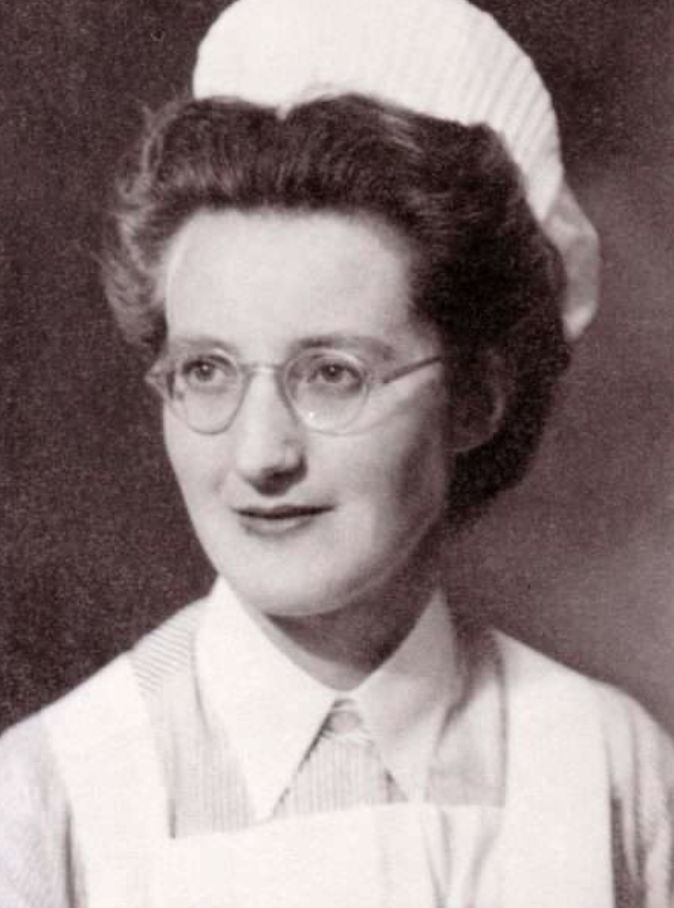
Dame Cicely Saunders
Jade Adgate is a death doula, educator, and advocate. Through her work at Farewell Fellowship, Farewell Education, and Farewell Library, she guides others in exploring mortality and cultivating understanding, reflection, wonder and care around life and death.