
You Don’t Have to Share Your Grief to Be Held in It
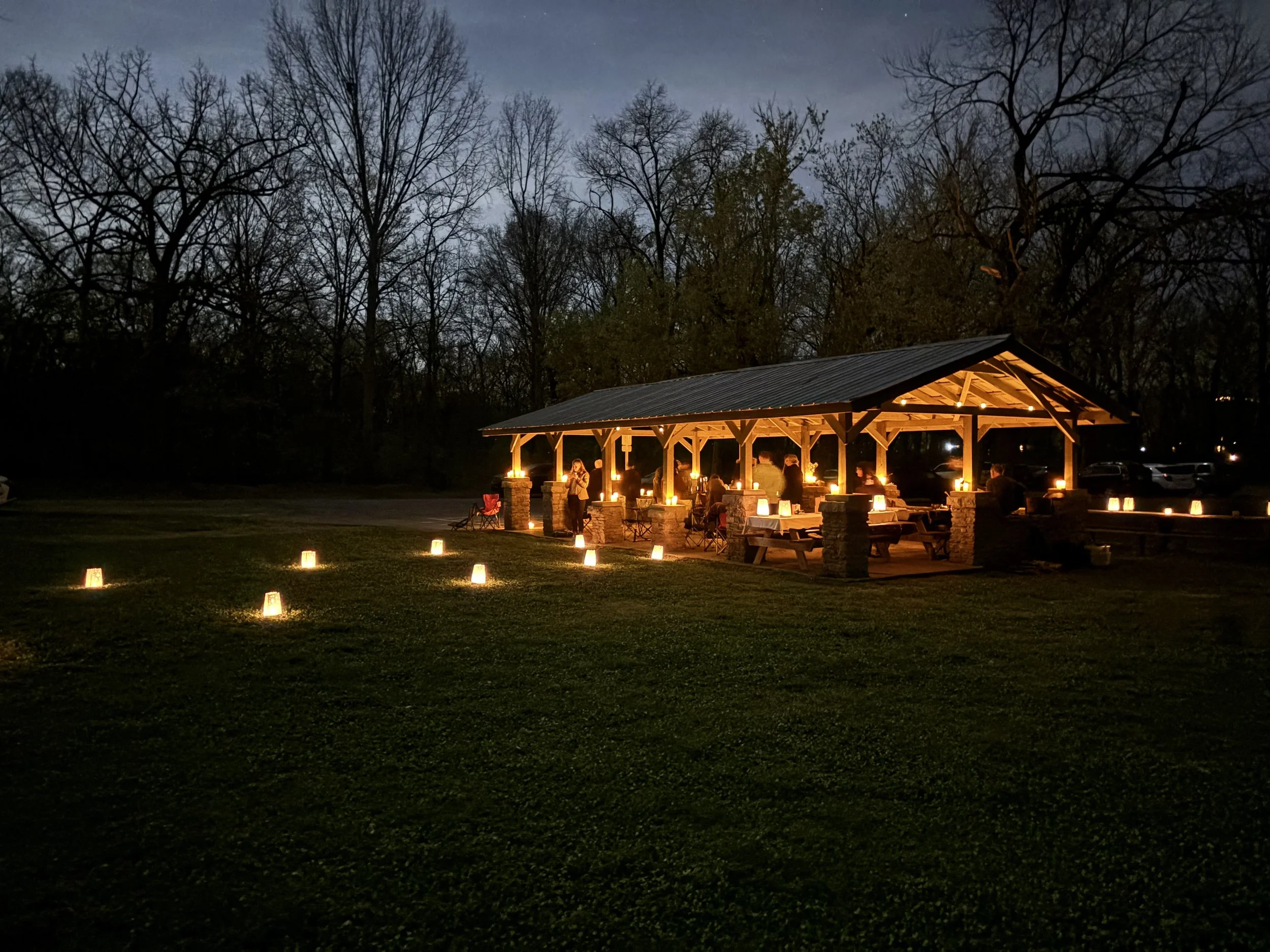
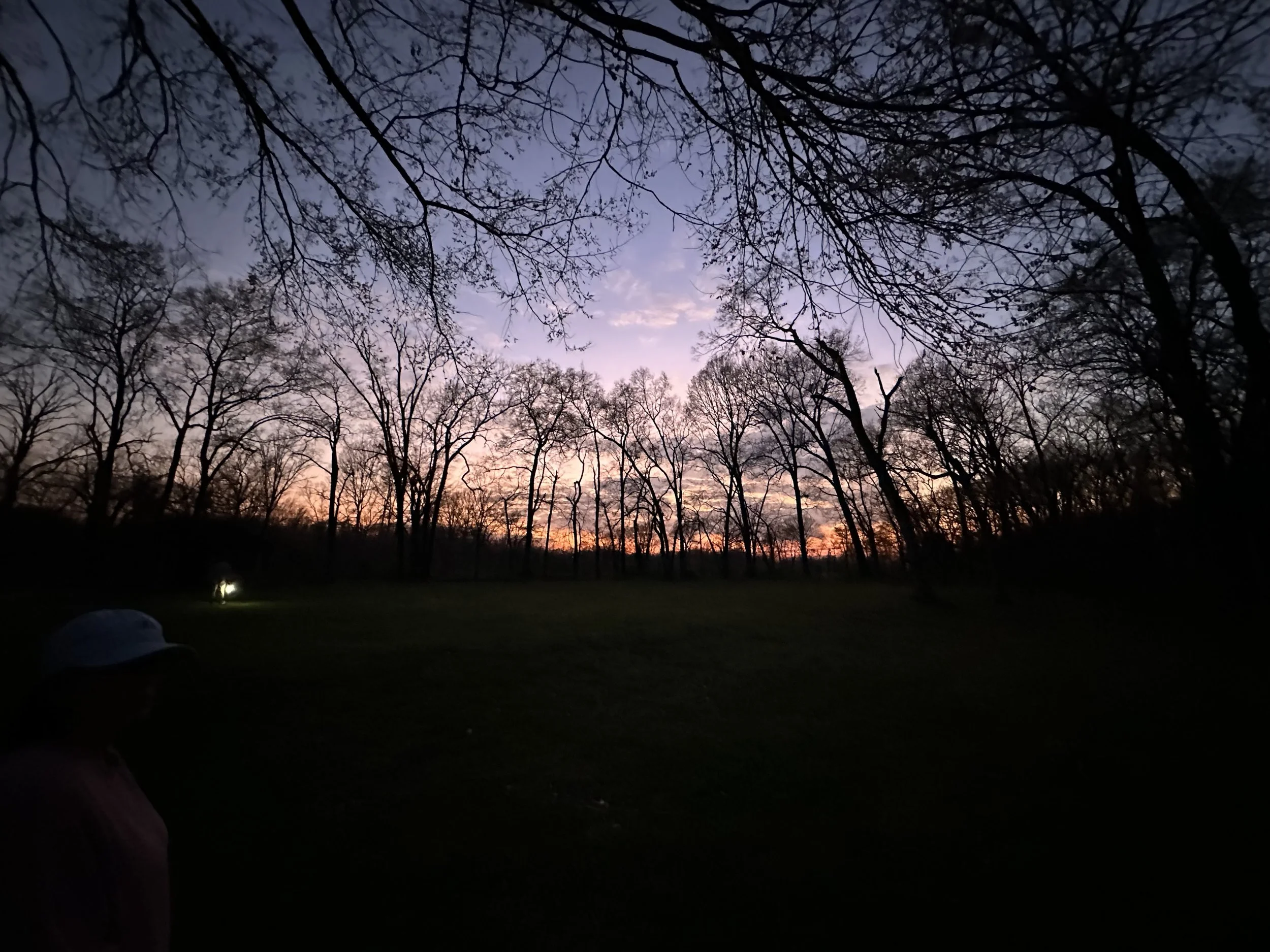
Last weekend, I invited some of my Farewell students to help lead a grief circle for our Middle Tennessee community. After weeks of planning, about twenty people gathered at sunset in a local park, under a candlelit shelter. A luminary-lit path guided the way to a tended fire, while the low, steady hum of sound bowls met the soft edges of classical guitar.
Together, we arrived. Together, we grieved.
And yet, very little was said.
From the beginning, we knew this would not be a traditional sharing circle. In my work as a death doula, I sit with people at the thresholds of life, moments where language often falls away. Grief lives in those same places. It is not always something that can be articulated, neatly packaged, or spoken into a circle of listening ears.
But it does ask to be tended.
This is what I have come to understand, both at the bedside and in the quiet aftermath of loss: grief is not a problem to solve. It is a presence to care for. And ritual is one of the oldest ways we know how to do that.
So instead of creating a space centered on sharing, we created a container for ritual.
The evening was built around the element of fire.
Earlier this year, an ice storm moved through our region and left the park altered: branches scattered, trees broken open, the landscape visibly changed. It felt like grief made visible. A reminder that loss is not abstract; it is something that reshapes the terrain of our lives.
And so we asked: what do we do with what has fallen away?
We burn it.
Fire became our anchor, as a symbolic act of release but also as a living participant in the ritual. It illuminated the path, warmed the night, and offered transformation. It reminded us that nothing we carry is meant to remain static forever.
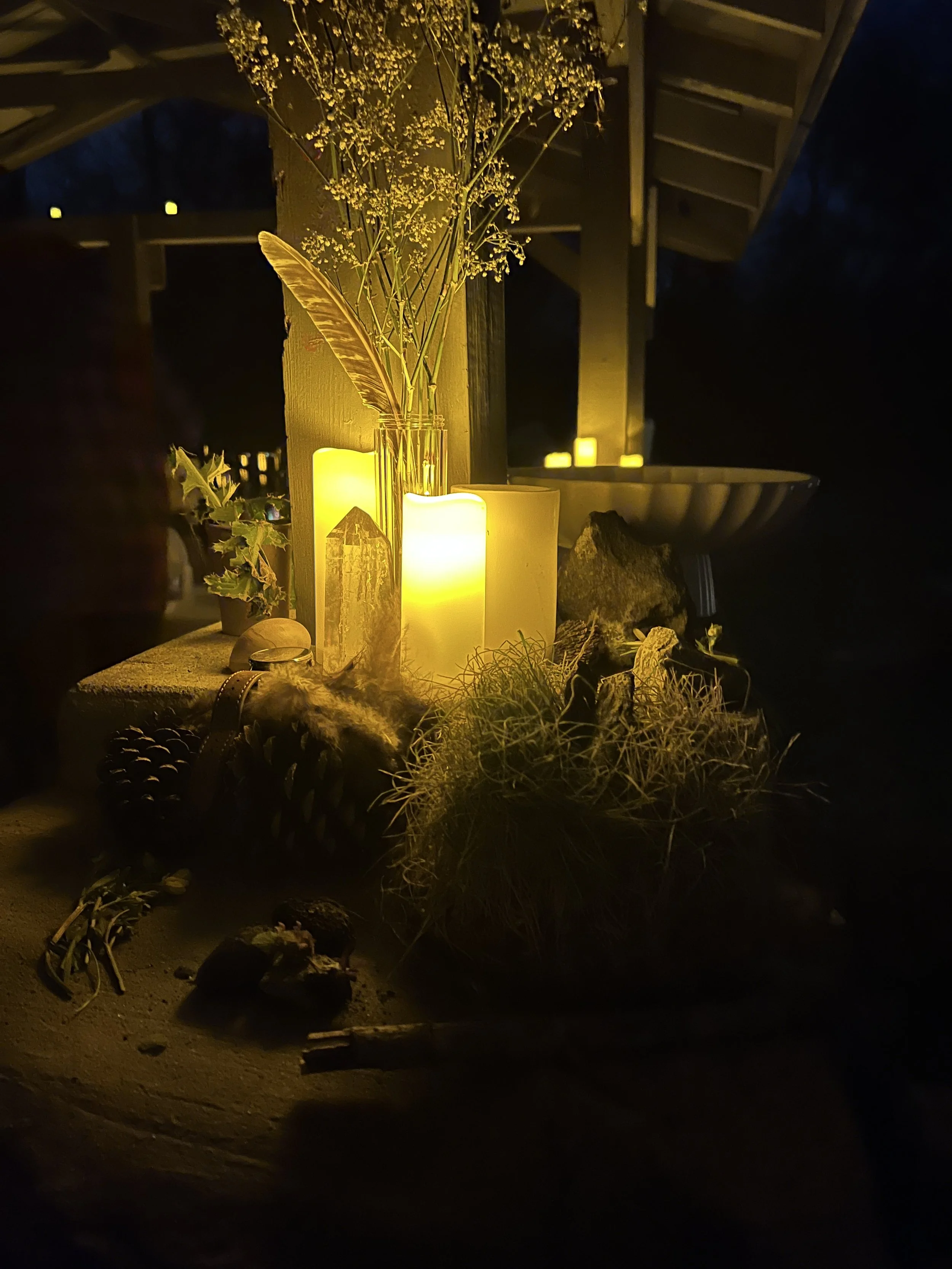
We began, as all rituals do, by preparing the space.
Candles flickered to life. Altars were built from feathers, pinecones, stones, and small objects brought from home, each one a quiet acknowledgment of what we carried. We opened with the sound of the “hu,” each voice entering at its own pitch, weaving together into something ancient and shared.
Before any grief was named, it was already being held.
As a death doula, I often witness how the body and spirit respond to ritual before the mind can make meaning of it. Something softens. Something opens. Something connects. Something recognizes: we are not alone in this.
The structure of the evening followed Francis Weller’s Five Gates of Grief, not as a lesson, but as a map.
Grief, as he reminds us, is not limited to death. It lives in everything we love and will one day lose. It lives in the parts of us that did not receive what we needed. In the quiet disappointments. In the collective sorrow of the world. In the ancestral currents we carry without fully understanding.
As we moved through these gates, participants wrote, reflected, and sketched. Some made lists. Some wrote letters. Some simply sat and listened to what was rising within them.
There was no right way to do it.
Because this is another truth ritual teaches us: grief does not need to be performed to be valid.
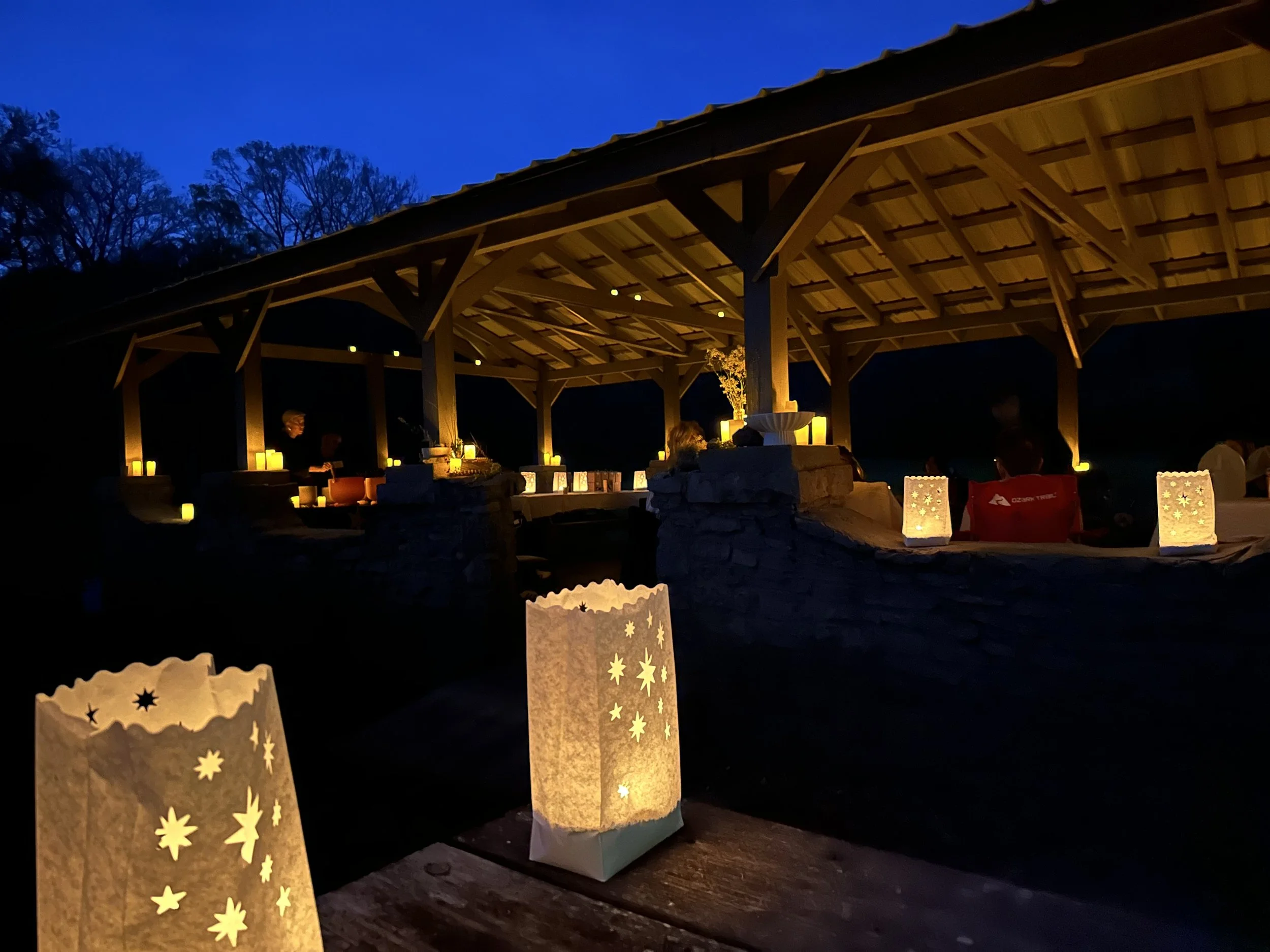
When the time came, we walked the luminary-lit path to the fire.
One by one, we offered our words to the flames. Paper curled. Ink disappeared. Smoke rose into the night air.
I stood shoulder to shoulder with others, not knowing what they carried, and yet feeling it deeply.
This is the quiet mystery of communal grief: we do not need the details to feel the weight, or the release.
In my work, I often say that we are not meant to hold grief alone. But that does not mean we must explain it to one another. Sometimes it is enough to stand in proximity, to witness the act of letting go, to feel the shift as something heavy begins to move.
We returned to the shelter in silence.
Candles were passed from hand to hand, each flame lit from the same source, each person briefly holding light before passing it on. The glow spread outward, warming the space, illuminating faces, softening the edges of the night.
And then, together, we blew them out. A shared ending. A collective exhale. A reminder that just as we release together, we also carry forward, changed, even if only slightly.
What became so clear to me that night is this:
This work is not about performance.
It is not about creating the “perfect” circle, or saying the right words, or facilitating some ideal emotional experience. We were not there as experts guiding others through grief. We were fellow travelers, each of us carrying something, each of us tending it in our own way.
And the circle?
It became exactly what it needed to be.
Some moments may not have met someone’s expectations. And that, too, is part of the work. Ritual does not exist to meet our preferences; it reveals what is true. Sometimes what feels “missing” in a communal space is an invitation inward, a quiet nudge toward what we are being asked to tend on our own.
This is something I see often in death work: the process unfolds as it must, not as we imagine it should. Our role is not to control it, but to trust it.
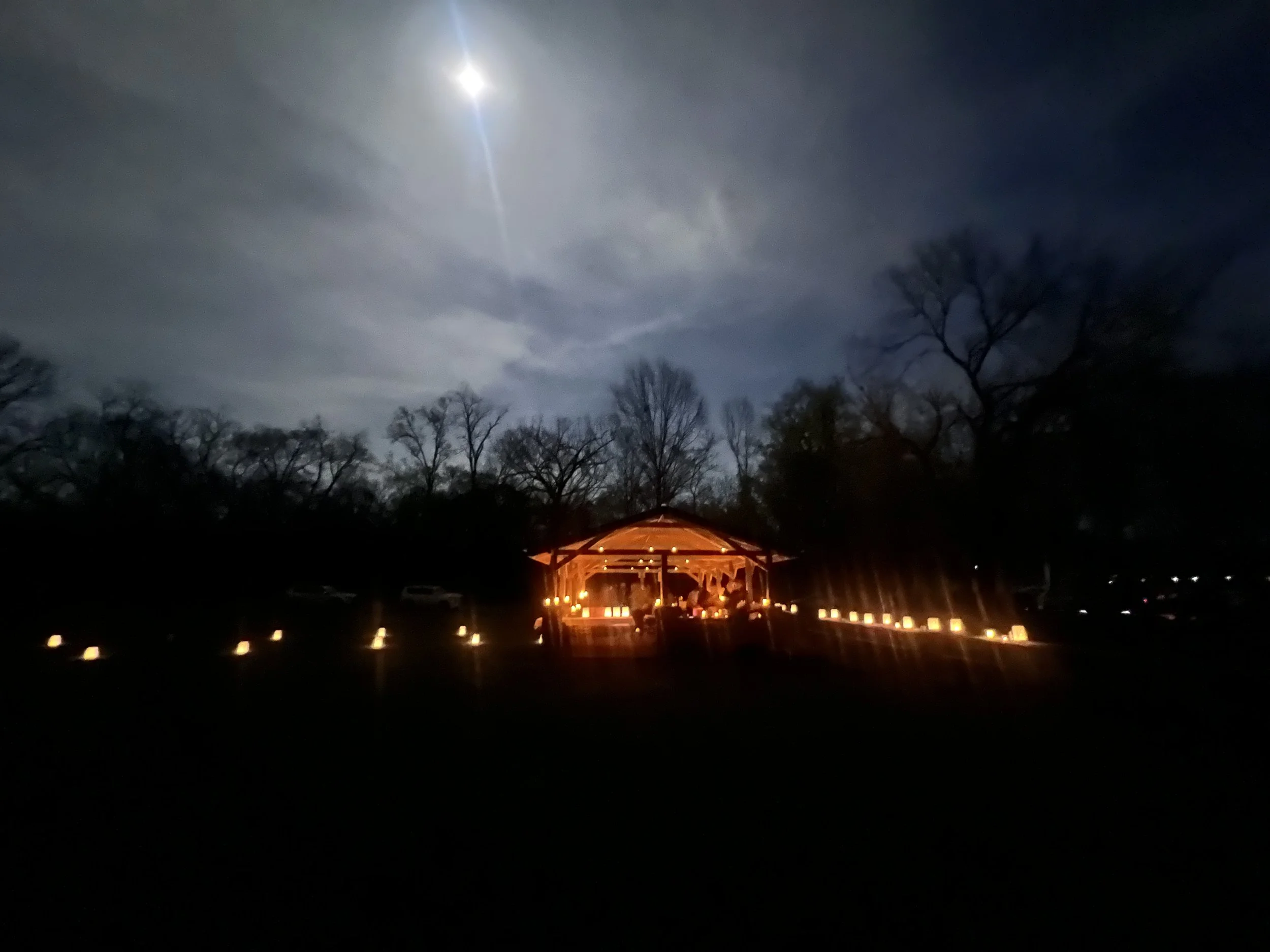
The night was powerful enough that I didn’t want to just let it go.
I put together a simple guide, a way for anyone to do something like this in their own community, their backyard, their local park, or living room. Nothing elaborate. Just a starting place.
Because we used to know how to do this. Collectively, as human beings, we knew how to make space for loss. We knew how to sit with hard things without rushing them away. Ritual is how we find our way back to that.
If you want the guide, you can sign up on my website. It’s meant to be adapted, not followed to the letter.
Grief will always be part of our lives.
The question is not whether we will experience it, but whether we will learn to tend it, independently and communally.
You don’t have to share your grief to be held in it.
But you do have to remember that it deserves your presence.
And sometimes, all it takes is a candle, a flame, and the willingness to begin.
Jade Adgate is a death doula, educator, and advocate. Through her work at Farewell Fellowship, Farewell Education, and the Farewell Library, she guides others in exploring mortality and cultivating understanding, reflection, wonder and care around life and death.