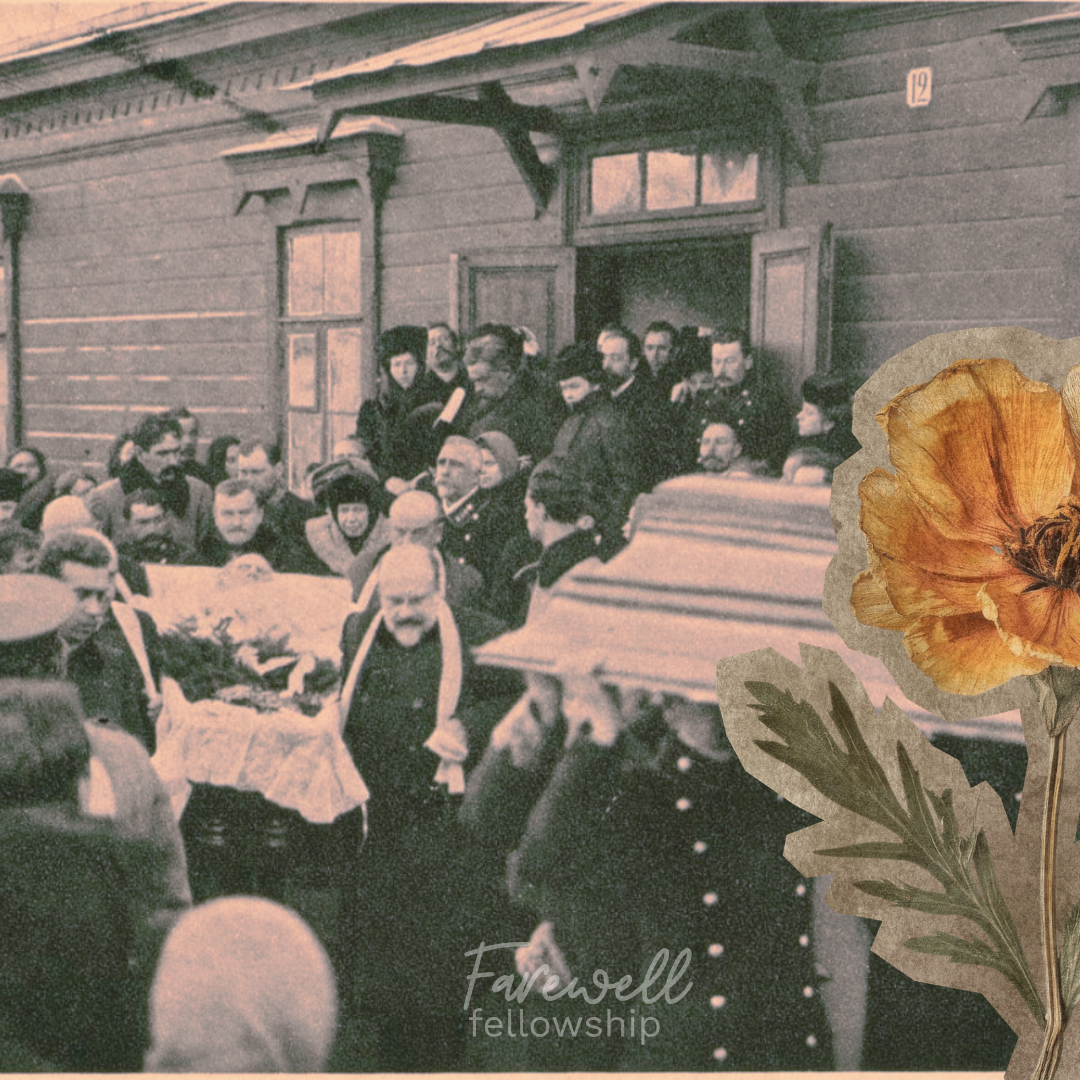
The Death Tolstoy Couldn’t Write
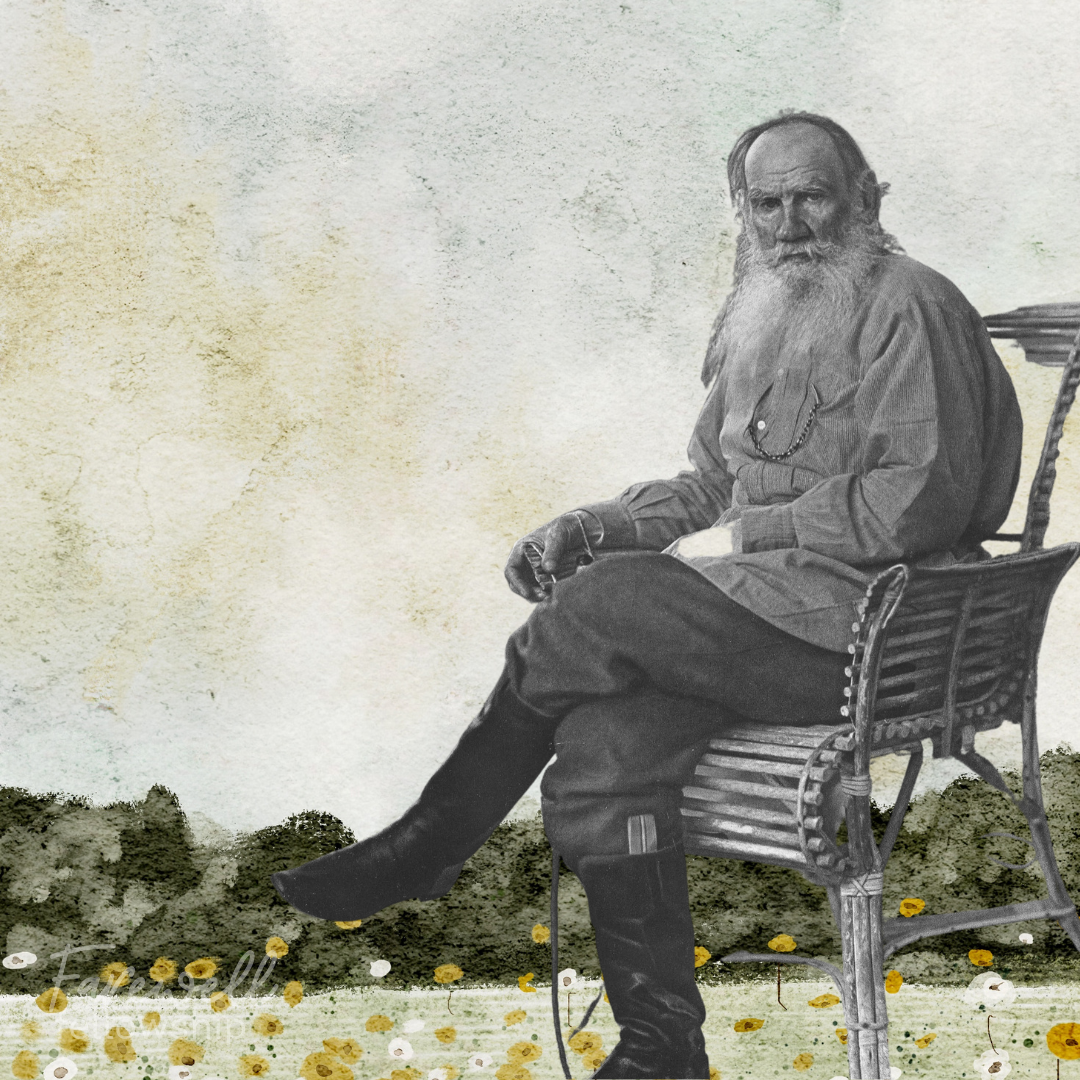
At 82 years old, Leo Tolstoy left his wife of 48 years in the middle of the night, to find a place to die. Tolstoy had spent much of his life thinking and writing about death. As a child, he’d lost both parents before the age of ten. Then his brother as a young man and eventually a beloved son. Tolstoy knew death well and he knew death personally. Throughout his works, he repeatedly contemplates what, if anything, can make a finite life meaningful. And as his own death approached, all he wanted was quiet. He didn’t get it.
Tolstoy had all the things that we imagine make a life meaningful: financial security, a large family, a long-lasting marriage, acclaim as a writer, and health that served him well into his eighties. But as he approached his final season, the very things that looked like “having everything” had become Tolstoy’s spiritual conundrum.
Decades earlier, Tolstoy began to deconstruct the life he had built. As we see him contemplate through his characters, Tolstoy begins to answer the question of what makes a finite life meaningful but the answer to his existential crisis is to relinquish the life of a count, the celebrity of his career, and the lavish comforts of his aristocratic inheritance. The problem, or a part of it at least, was that Tolstoy did not live his life in solitude.
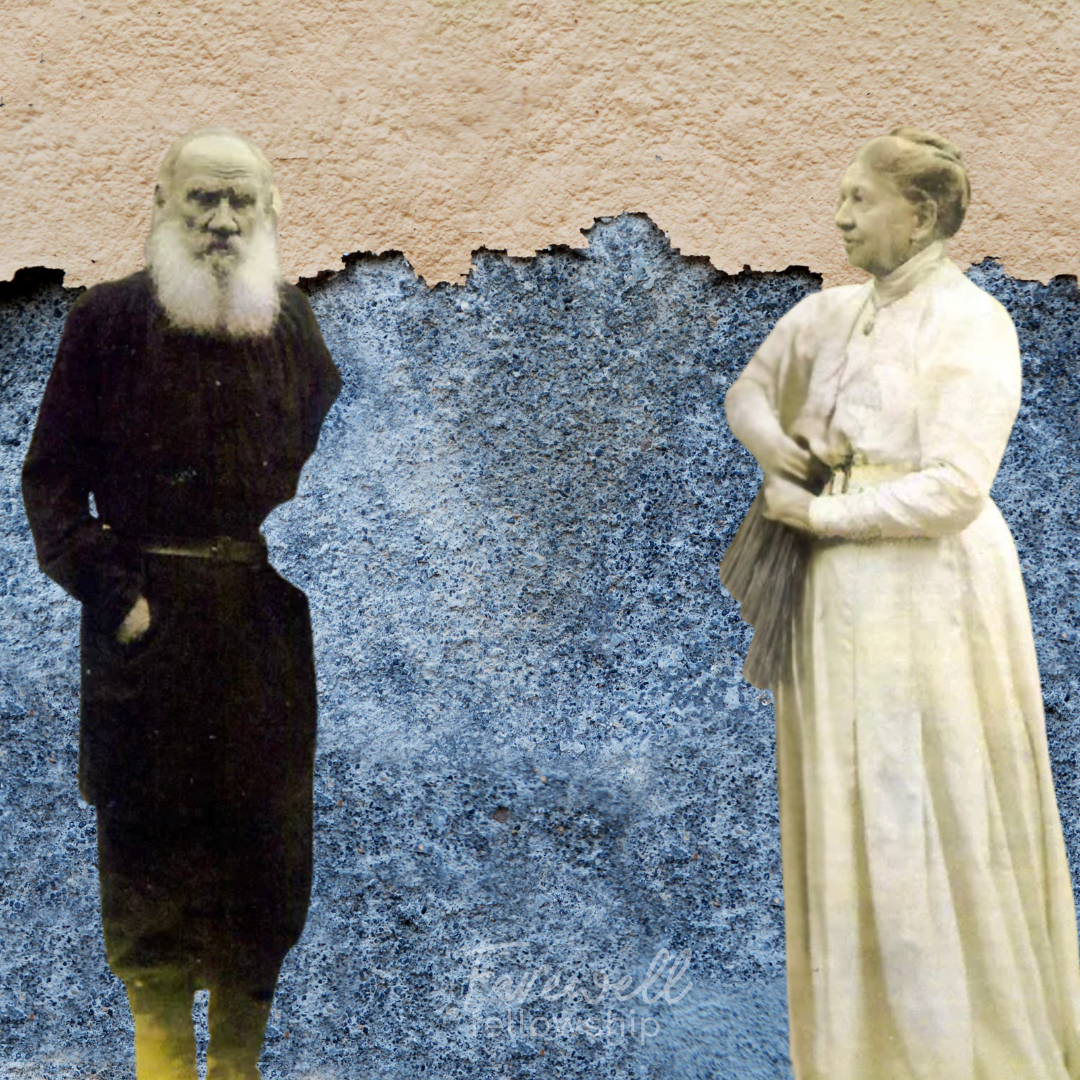
Tolstoy’s wife, Sophia, had spent decades raising a family (13 children), managing their household, and quietly supporting his literary career to protect their financial future. When her husband began to preach the necessity of denouncing his worldly attachments, the very security that Sophia had dedicated her life to maintaining was threatened. By the end of his life, the gap between how Tolstoy lived and how he believed he should be living was enormous. And the blame for that gap was placed largely on his spouse. And so, in the quiet of the night, at age 82, after 48 years of marriage, Tolstoy left.
Throughout Tolstoy’s work, we see him consider death. In War and Peace, Prince Andrei finally released his ambition, resentment, and earthly striving when death changes his sense of what really matters. Then, Anna Karenina’s Levin faces the existential crisis of whether a finite life can have any meaning at all. In The Death of Ivan Ilyich, death serves as a judgment on the life that was lived.
But because Tolstoy is a literary giant, and because Death is always keeping us mortals on our toes, there is something almost too perfectly Tolstoyan about what happened next.
Though Tolstoy snuck out in search of solitude, he became too ill aboard the train to continue and was carried into the home of a stationmaster and put to bed. But the world, his celebrity, followed him there. As news spread that Tolstoy was dying, all the trapping of his material world gathered at his deathbed: reporters, doctors, his followers and fans, family, and eventually, Sophia too. Tolstoy’s last moments were in integrity with the way he lived his life. Not his values, or his hopes, or even his plans but the way he actually lived.
In Confessions, Tolstoy writes as himself: “Is there any meaning in my life that the inevitable death awaiting me does not destroy?” The man who had spent so much of his life asking what remains when death strips everything else away was dying surrounded by the very things he had been trying to leave behind: relationships, obligations, conflict, fame, family, history. I keep thinking about that.
People often ask me whether I have my own “death plans” in order. And to the extent that I can, I do. My advance directives are complete. I have considered what I would want from a vigil, should I be fortunate enough to have one, and what I want done with my body after I die.
I believe deeply in that kind of preparation. But spending time with dying people has also made me suspicious of the idea that preparation gives us control. We can decide who we want making medical decisions for us. We can document what interventions we would or would not want. We can choose songs and readings and disposition and write down what we hope the room might feel like. What we cannot do is arrive at death without the life that came before it.
I keep returning to the phrase “how we live is how we die,” even though I am wary of the certainty with which it is sometimes said. I don’t think it means that kind people are rewarded with peaceful deaths, or that people who have done their emotional work die without fear. Bodies do what bodies do. Disease, medication, delirium and circumstance have their own say.
I mean something far less tidy, that my work at the bedside and my understanding of Tolosty’s death both show: we arrive at death as ourselves.
Tolstoy could leave his house. He could dress in paupers clothes and pack simply only what he needed most. He could not leave behind 48 years of marriage. He could not leave behind his children, his fame, his privilege, his conflicts, his contradictions or the consequences of the choices he had made while living.
Maybe this is what contemplating death is actually for. Not to rehearse our dying so thoroughly that we will know exactly how to do it. Not to spare ourselves fear, conflict or regret. And certainly not to arrange the circumstances so carefully that death finally submits to our plans.
We contemplate death because it gives us a vantage point from which to see our lives while we still have time to do something about them. The value in contemplating our mortality is not that we will someday be better at dying. It is that death has a way of making life startlingly clear and we don’t have to wait until the end to look.