
I Followed the Body Into the Funeral Home
A death doula's behind-the-scenes glimpse into what happens after the body leaves our care
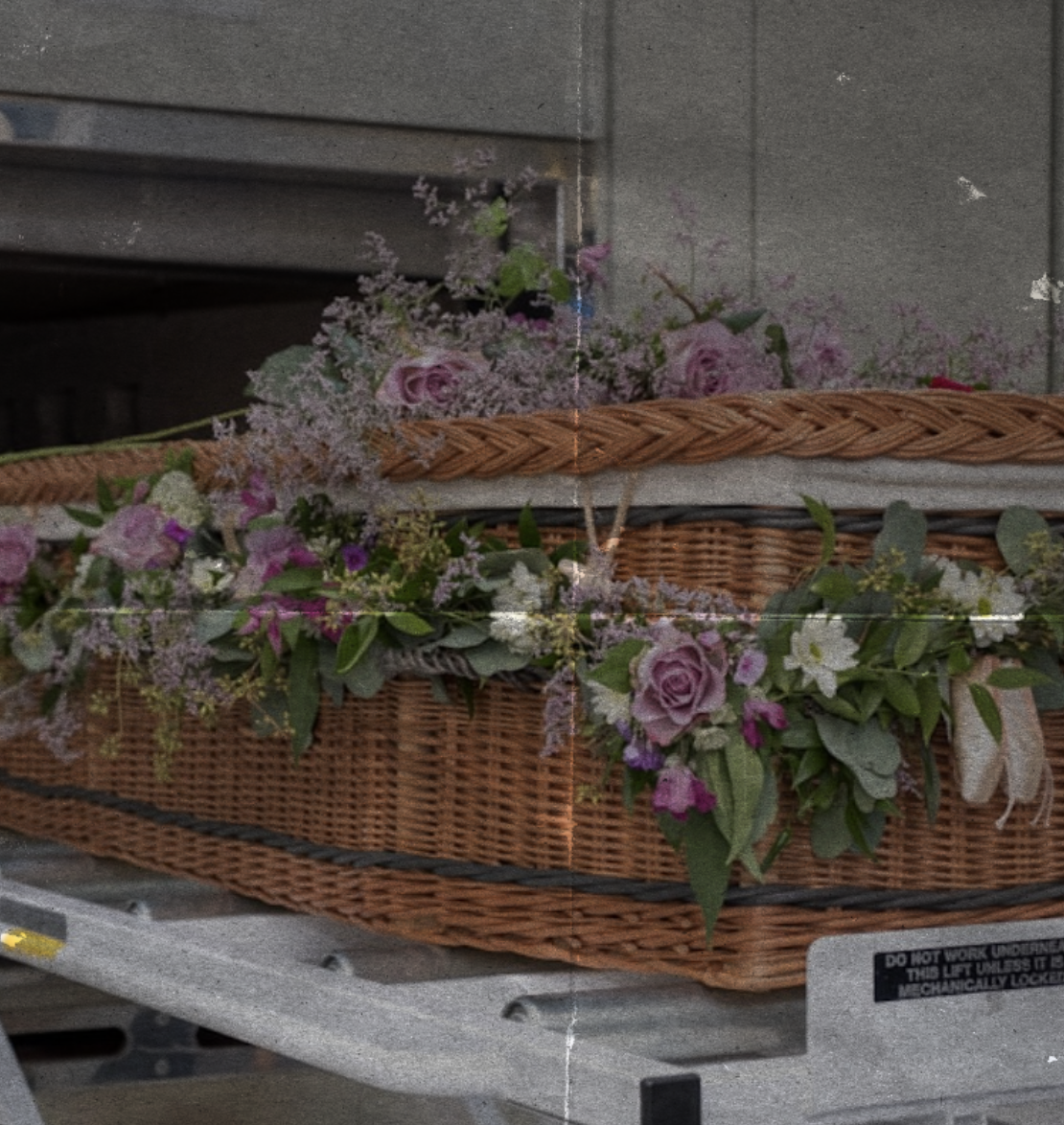
Photo by The Good Funeral Guide on Unsplash
Last month, two of my clients entered the care of the same funeral home.
One family chose natural burial. Another chose cremation.
In both cases, I found myself lingering in the same emotional threshold that death doulas often quietly occupy: the moment the body leaves our care and enters someone else’s hands.
As death doulas, we often become watchers of the dying body. We sit vigil through the long hours of transition. We offer respite care to exhausted families. We dim lights, refill water glasses, adjust blankets, anoint foreheads, and sit quietly beside hospital beds long after conversation has ended. In the final hours of life, the body often becomes something tender and communal, cared for collectively by family, hospice workers, nurses, chaplains, and doulas alike.
And then, eventually, the body leaves our care.
This transition has always felt significant to me. There is an intimacy that develops when tending to the dying, a kind of temporary guardianship. I have often found myself wondering: who receives the body next? Will they be gentle? Will they move slowly? Will they understand that this person was deeply loved only moments ago? Will they know that he loved Hershey kisses and lined them up like a tiny silver bell army on his bedside table? Or that she grew the bluest irises in all of Tennessee? Will they care?
In Tennessee, a death certificate can only be filed by a licensed funeral director, which means that even within home funeral work, collaboration with funeral homes is essential. But beyond legality, I have come to believe something else: families deserve funeral directors they trust completely. And the families I serve trust me to help them find the best provider.
I first met Chuck Crawford, owner of Crawford Funeral Home, when the parents of one of my pediatric clients hoped to hold a home funeral for their child. These are delicate requests. Families are often grieving deeply while simultaneously trying to navigate systems they know very little about. Chuck not only supported the family’s wishes without hesitation but also offered all of us (family, doula, and care team alike) round-the-clock support during one of the most heartbreaking experiences imaginable.
From that point forward, I began referring families to Chuck and his wife, Heide. This week, I visited Crawford Funeral Home to walk through the facility with their team and better understand what happens after the body leaves the home. I wanted to understand, step-by-step, what happens to the bodies of the people I care for when they leave my care for the final time.
Before continuing, I want to acknowledge that conversations and images related to death care can feel tender for some readers. There are no bodies shown in these photographs, but this essay offers a behind-the-scenes look inside a working funeral home and crematory.
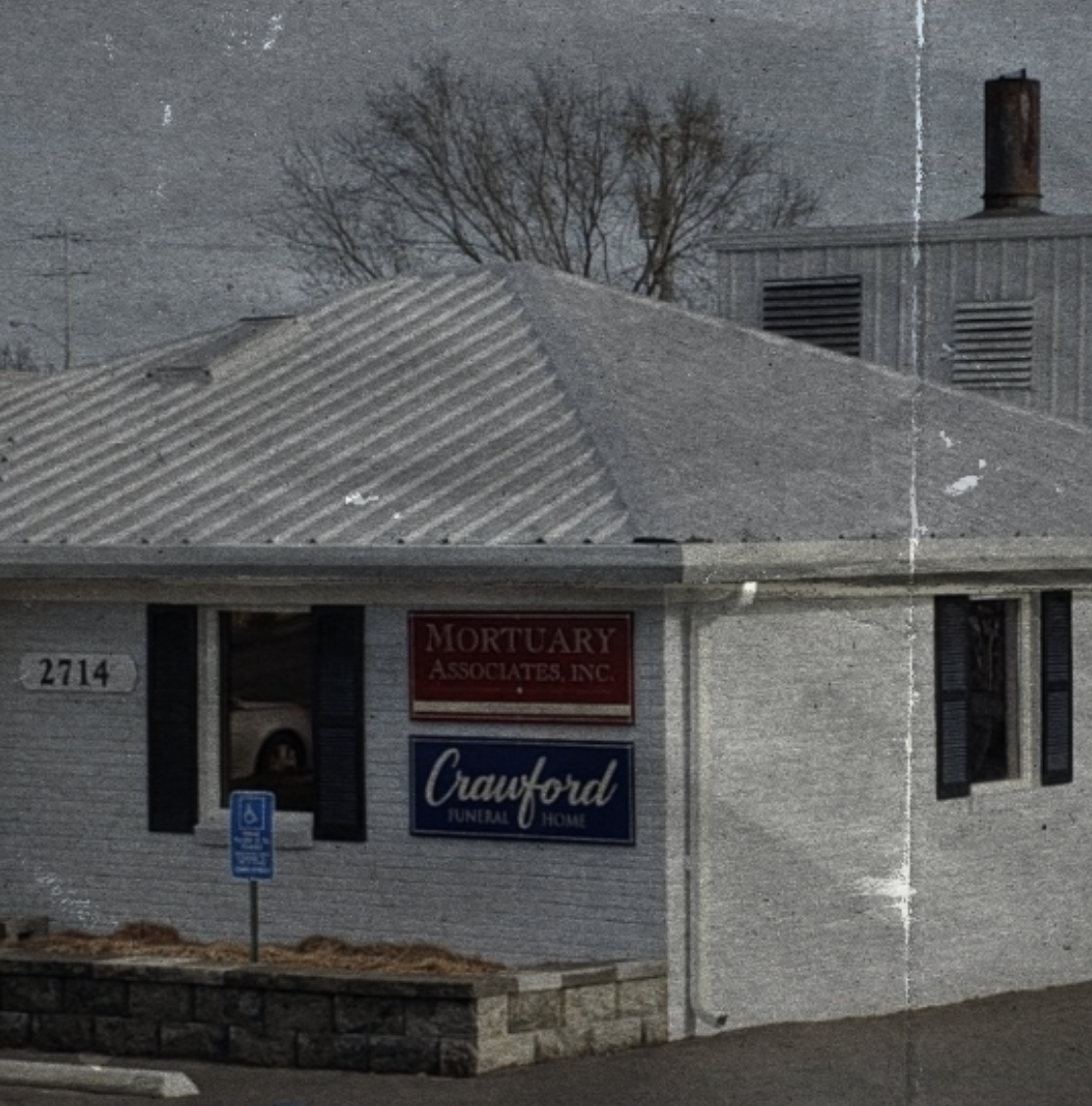
Crawford Funeral Services, Nashville, Tennessee
The first thing that struck me was how ordinary everything felt.
Not cold. Not theatrical. Not frightening. Just deeply human. Crawford Funeral Home was founded in 1985 and remains family-owned and operated. Chuck and Heide still answer the phones themselves (even in the middle of the night!). Unlike many funeral homes today, they do not outsource their services to third-party facilities. The care remains local, direct, and intentionally personal. In my opinion, this is the gold-star standard for funeral homes that I refer my clients to: locally owned and operated with a long-standing reputation and the ability to provide all services onsite.
In recent decades, much of the funeral industry has quietly shifted toward corporate consolidation. Many families do not realize that the funeral home they meet with may subcontract transportation, embalming, cremation, or body storage elsewhere. Spending time at Crawford reminded me how profoundly different it feels when the people guiding the family are also the people actually caring for the dead.
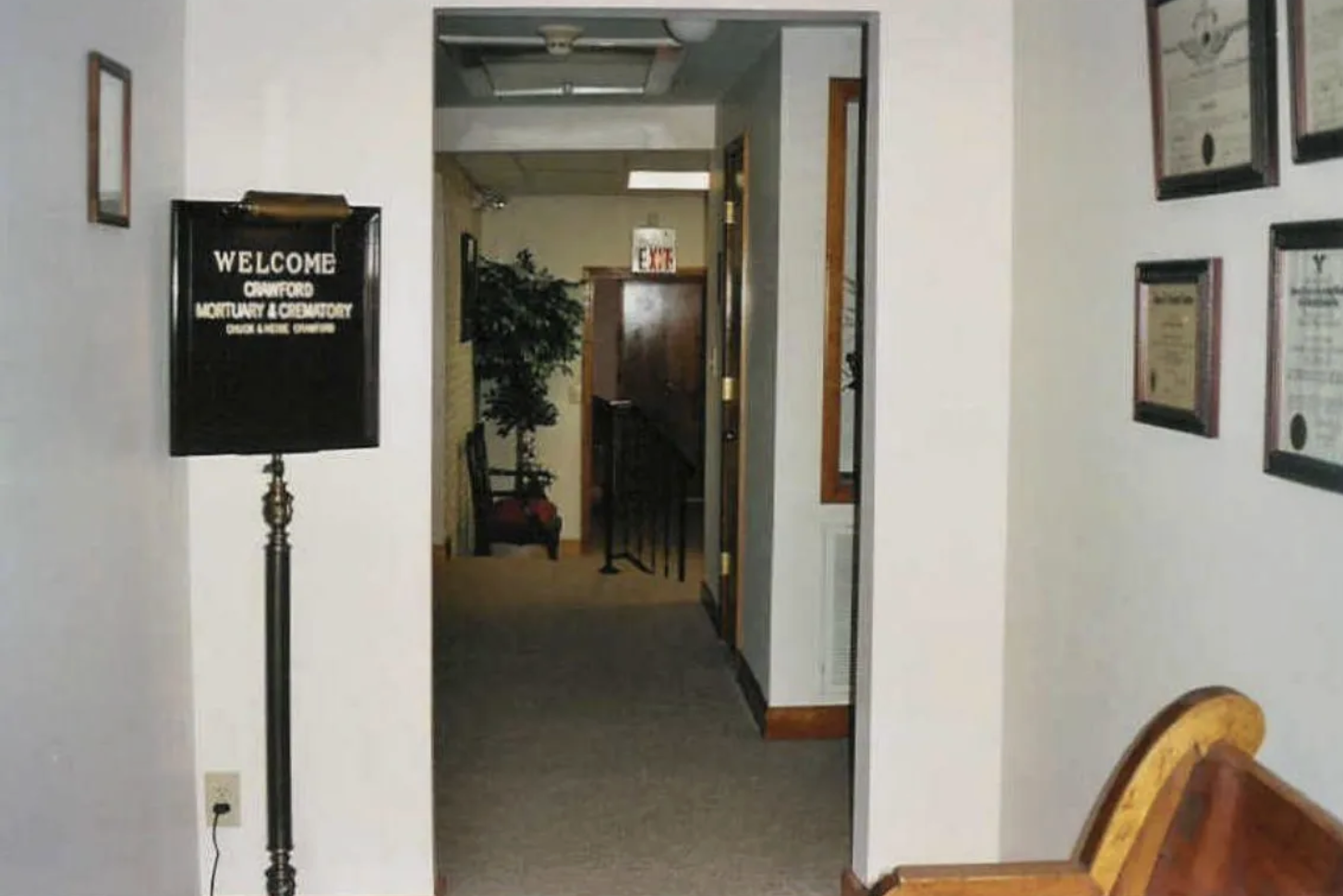
Inside, we began in the family planning room. This is often where grief first collides with logistics.
The hours after a death can feel surreal. Families are exhausted, shocked, emotionally flooded, and if unprepared, they are suddenly expected to make decisions about paperwork, cremation, burial, transportation, obituaries, flowers, timelines, and budgets. The environment in which those conversations happen matters more than we often acknowledge.
A soft chair matters. Patience matters. A funeral director willing to explain something twice matters. Spaciousness to take a pause before entering into these conversations matters. Grief imprints itself onto rooms.
From there, we walked into the visitation space.
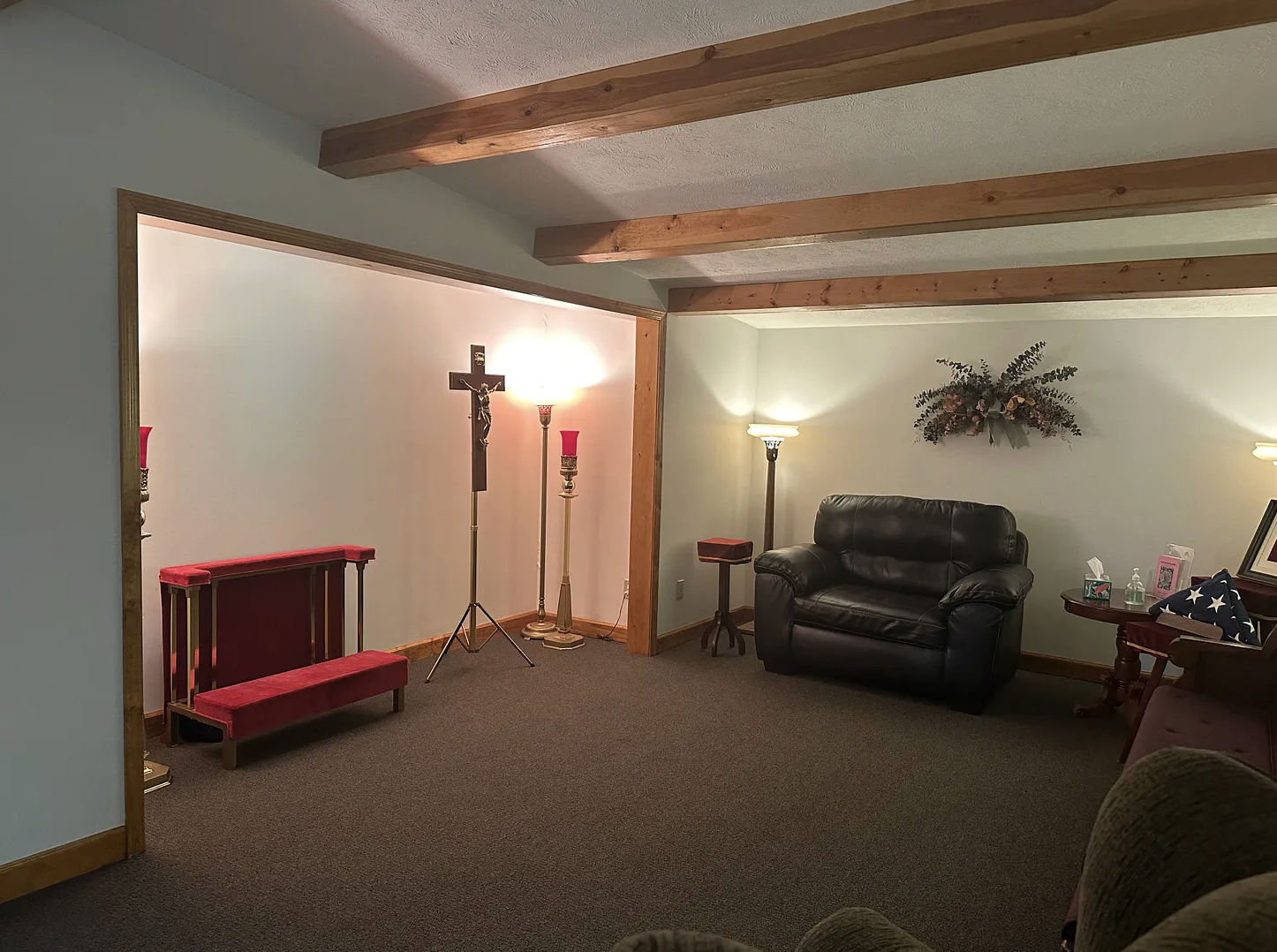
Visitation spaces offer a chance to be alone, privately, with the loved one after death. The Visitation space at Crawford is intentionally homey.
Interestingly, Crawford does not operate like the traditional funeral parlors many people imagine. Because they primarily serve Catholic and Jewish communities, funeral services themselves are often held in churches or synagogues rather than inside the funeral home. Crawford instead offers visitation spaces for families who wish to gather, witness, or say goodbye privately.
Recently, one of my clients died before her grandchildren had a chance to say goodbye. Their mother worried that seeing the body might frighten or traumatize the children. This fear is incredibly common in modern American grief culture, where death has become increasingly hidden from everyday life.
But children are often less frightened by death itself than by secrecy around it.
With thoughtful preparation and support, viewing the body can help children understand the reality of death in a concrete and emotionally grounding way. It offers the nervous system a chance to catch up with reality. It says: this happened, and we are allowed to grieve it together.
The Crawfords are intentional about making their visitation room feel homey and unhurried. The space is designed to soften the edges of what is often a difficult moment, offering something closer to what death once was in many families: tended at home, surrounded by familiar comforts, rather than separated from everyday life in an unfamiliar institutional setting.
Next came the preparation room.
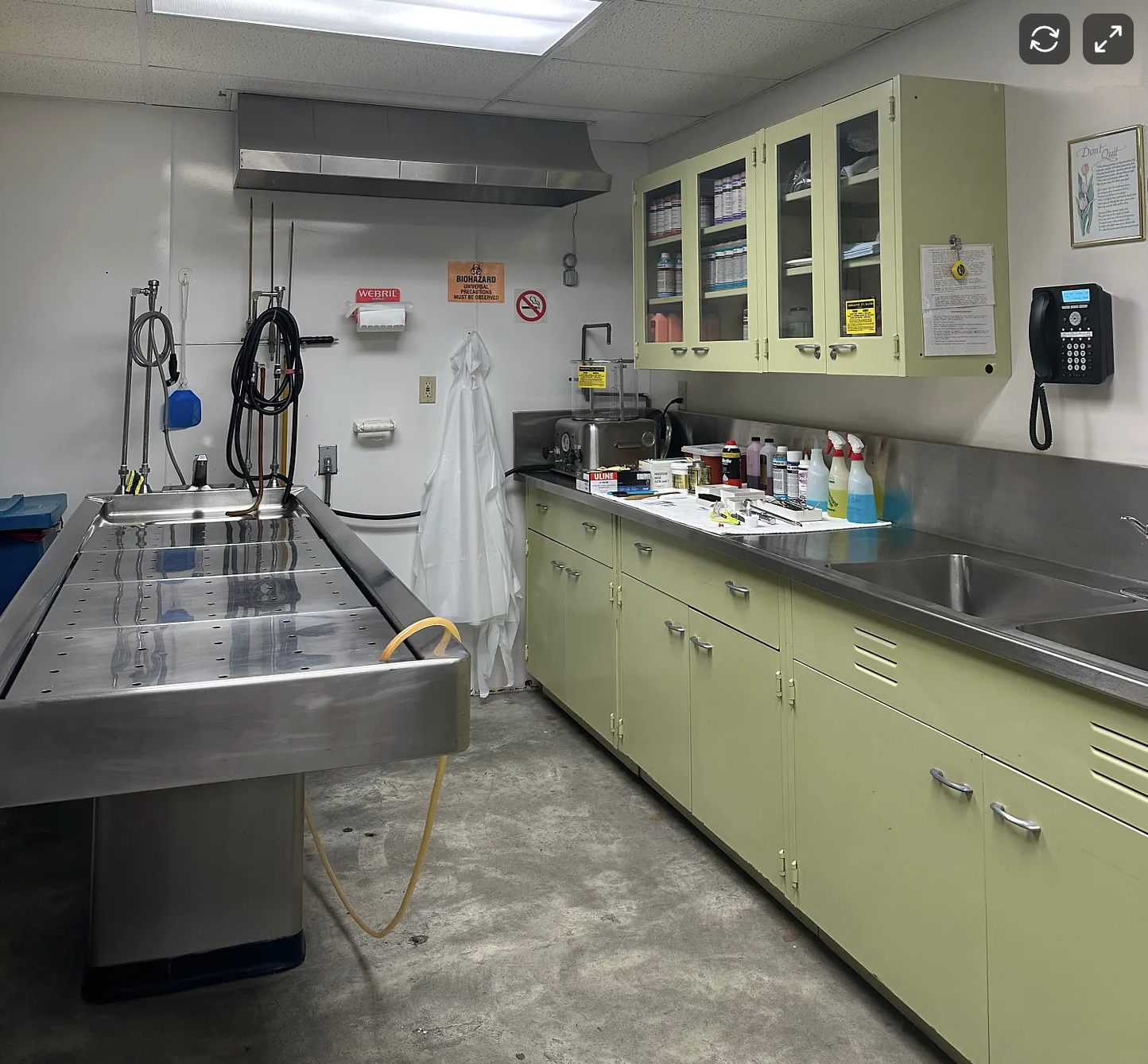
The prep room at Crawford is kept clean and sterile at all times.
This is perhaps the room people fear most, likely because it is the room we imagine least accurately.
This is where bodies are washed, prepared, dressed, cosmetized when requested, embalmed, and cared for before burial or cremation. Contrary to popular belief, embalming is not legally required in most situations and is no longer automatically considered standard practice. Increasingly, families are choosing simpler and more natural forms of care, particularly when burial or cremation occurs within a shorter timeframe.
What struck me most was not the clinical nature of the room, but the gentleness with which the staff spoke about their work.
Preparation, at its core, is an act of care. When asked if they had any rituals they relied upon in this work, they shared the tradition that Chuck started and that they continue to uphold: gently patting the head of the deceased, thanking them, and wishing them well on their journey. Every single person who passes through their care is given respect, dignity, and gratitude for the final time by their after-death care team.
Then we visited the refrigeration area.
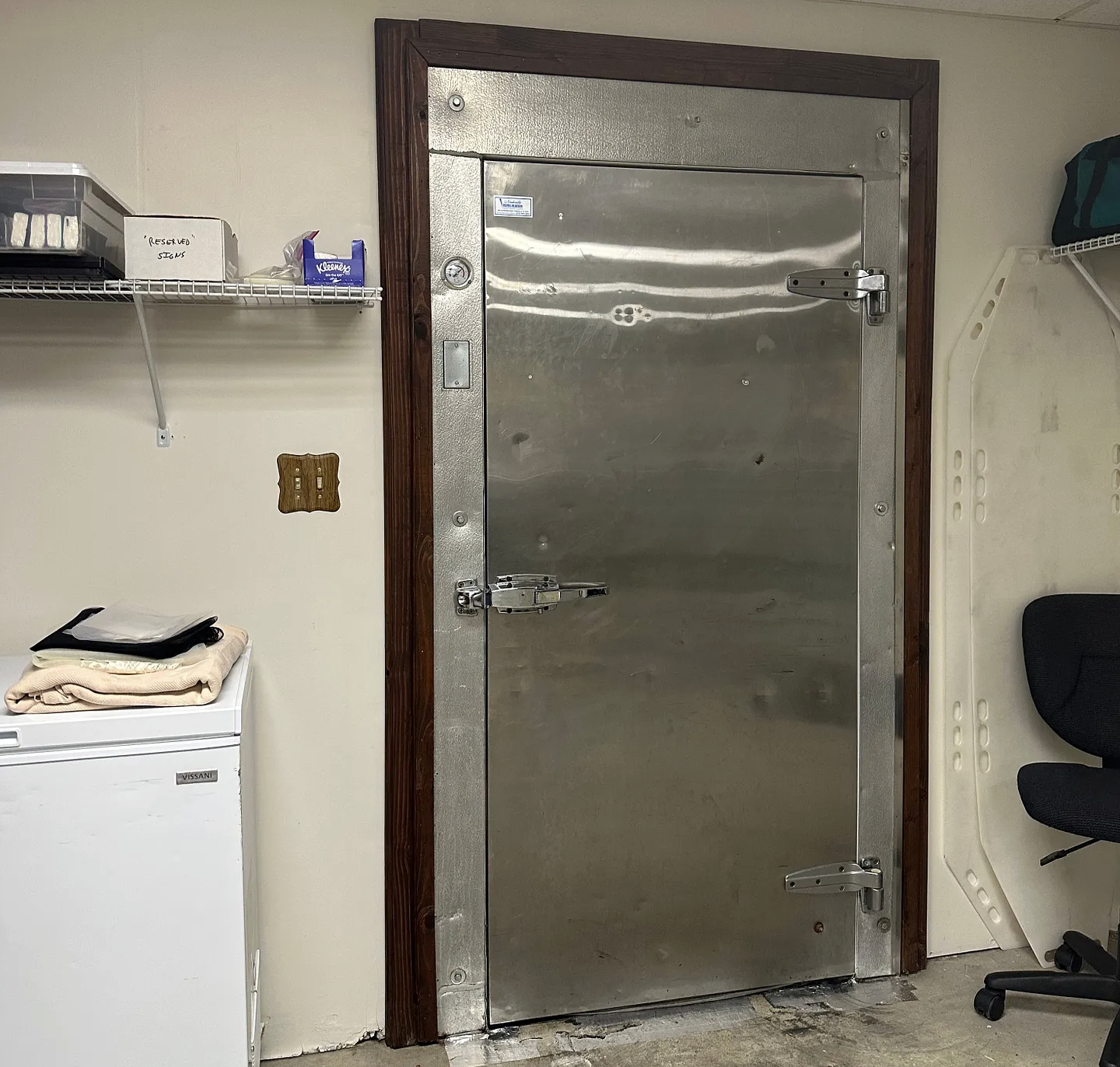
Refrigeration offers families the gift of time.
This space often carries emotional weight for people. Refrigeration can sound harsh or impersonal until you understand its actual purpose.
In reality, refrigeration offers families something invaluable after a death: time.
Time for siblings to fly in from across the country. Time for grandchildren to arrive home from college. Time for a family in shock to make decisions without feeling rushed into them. Time for grief to begin catching up with reality.
One of the great disorientations of death is how quickly practical decisions appear. Refrigeration creates a pause within that urgency.
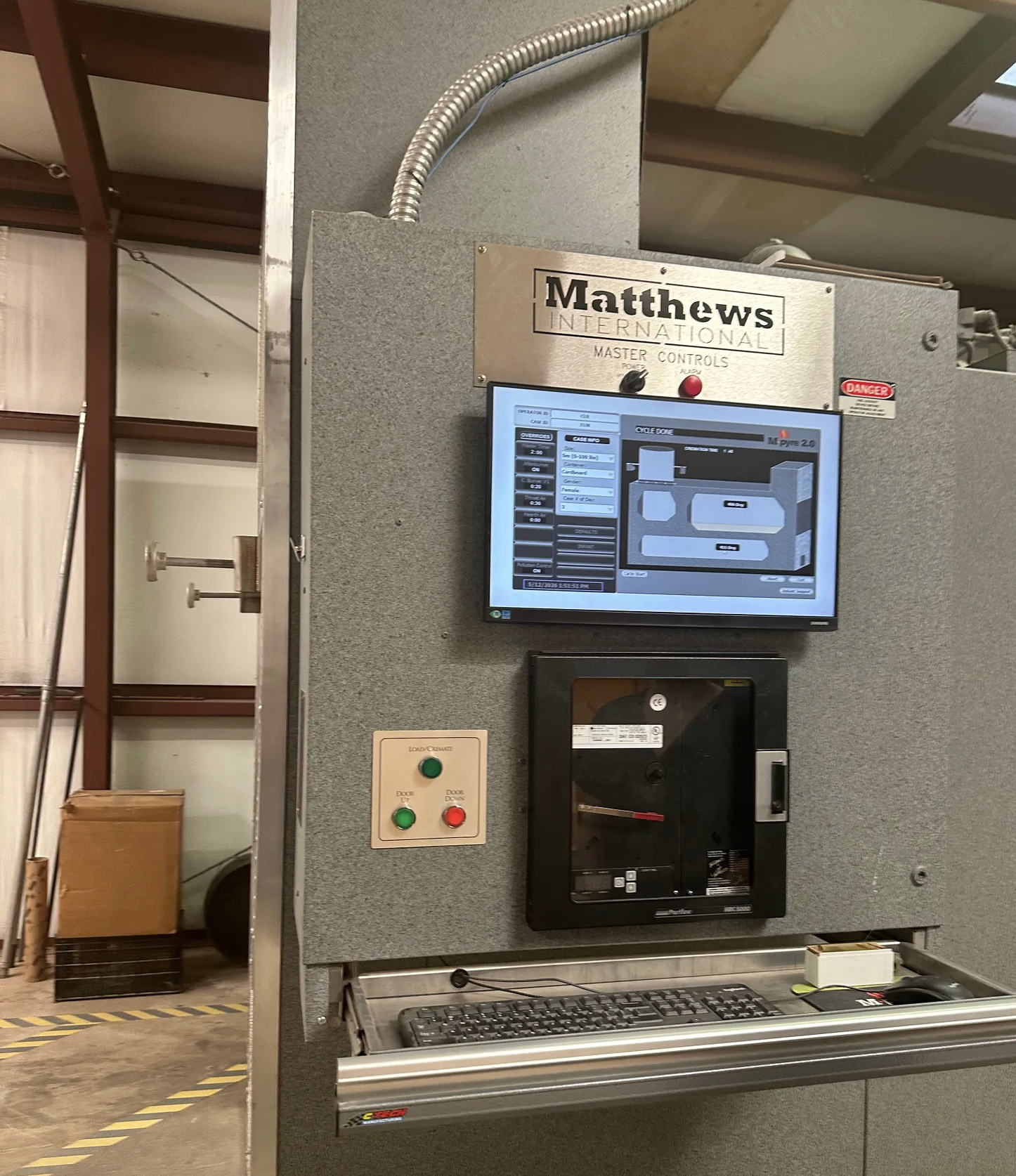
The control interface for a Matthews retort, where operators monitor and regulate temperature, timing, and cycle settings as part of a tightly controlled cremation process.
Nearby was the crematory.
For many people, cremation exists almost entirely in abstraction. Families choose it every day while rarely understanding where or how it actually occurs.
Crawford Funeral Home is one of only a small number of facilities in Nashville that perform cremation on-site. They operate two of the region’s seven cremation units, while there are more than one hundred funeral homes in the area. This means that a significant portion of cremations are outsourced to third-party facilities, separating the body from the original place of care. At Crawford, by contrast, the person remains in the custody of the same team from beginning to end.
For some families, that continuity matters deeply. There is comfort in knowing that the same people who received your loved one are the ones who remain with them through each stage of care.
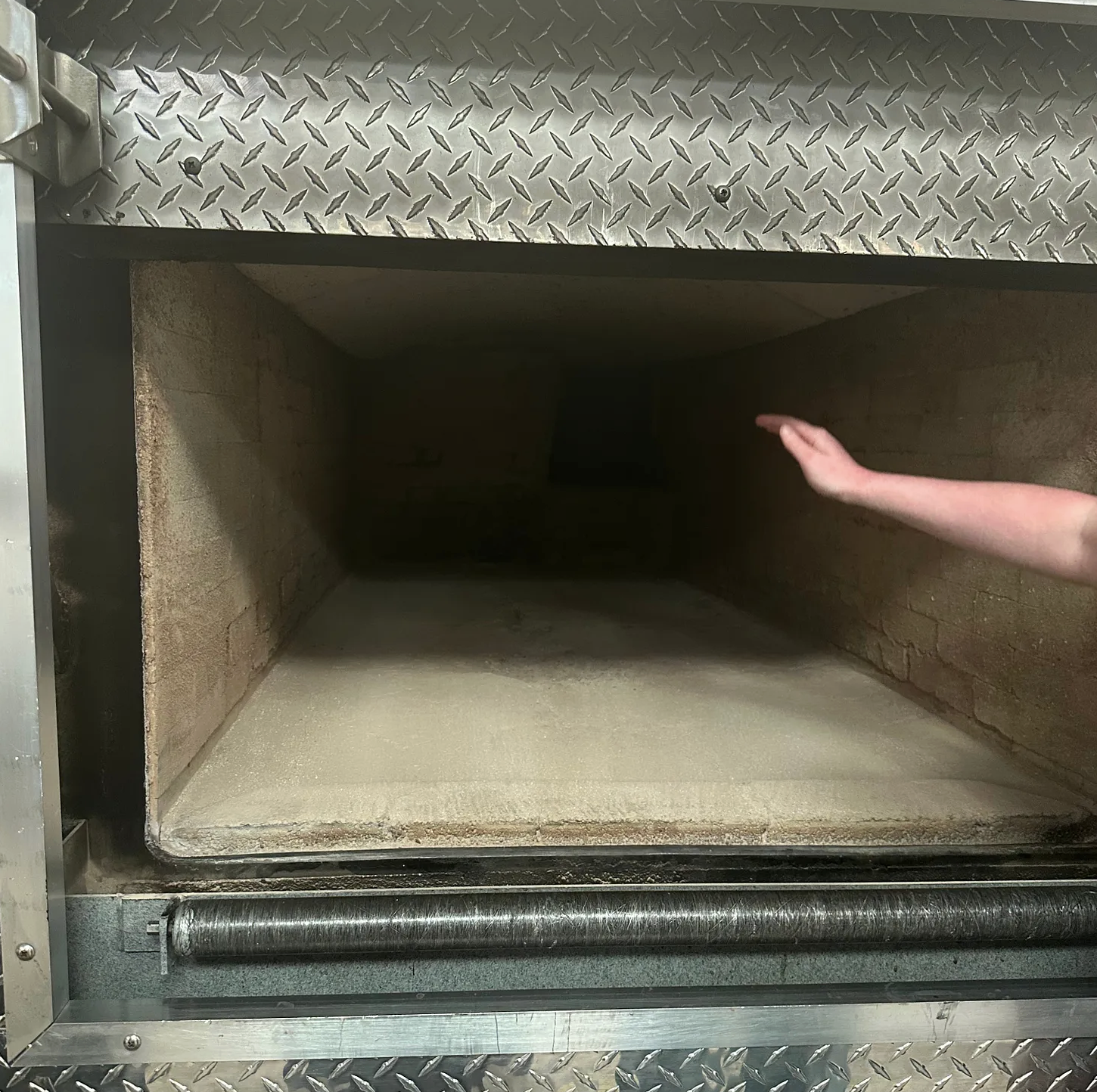
The retort, or cremation chamber, where high heat and time do their final work under strict regulation and human oversight.
Chuck now stewards the next generation of funeral directors, four young people who work for Crawford today, all trained funeral directors and embalmers. As we walked together through the funeral home, answering questions and discussing misconceptions about death care, I found myself unexpectedly emotional.
Perhaps because they represented something hopeful.
The future of funeral service looks different from what many people imagine. Less mysterious. More transparent. Less transactional. More relational.
As death doulas, we often speak about reclaiming death from institutions, and I understand that impulse deeply. But my time at Crawford left me with a different reminder: good death care is not about avoiding professionals altogether. It is about knowing who you are entrusting the dead to.
There is profound comfort in that distinction.
Perhaps death becomes less frightening when we better understand the hands that receive us after the vigil ends.
“Don’t be afraid to share what your person would have been honored by,” one funeral director, Calia, said to me. “We love knowing who they are and having our part in honoring them.” Her colleague, Maddie, added, “I’ve played favorite songs, ball games, read poems, whispered prayers. It’s an honor.”
The purpose of this essay is to offer a behind-the-scenes glimpse. Death doulas are there to support families as they care for their loved one, or to provide guidance when care is provided at home, but so too are local funeral home professionals. When the body leaves the care of the family for the final time, knowing the people and places it enters next can ease fear and correct misconceptions.
Understanding that continuity of care does not end at the threshold of the home may be one of the ways we soften what we most fear.
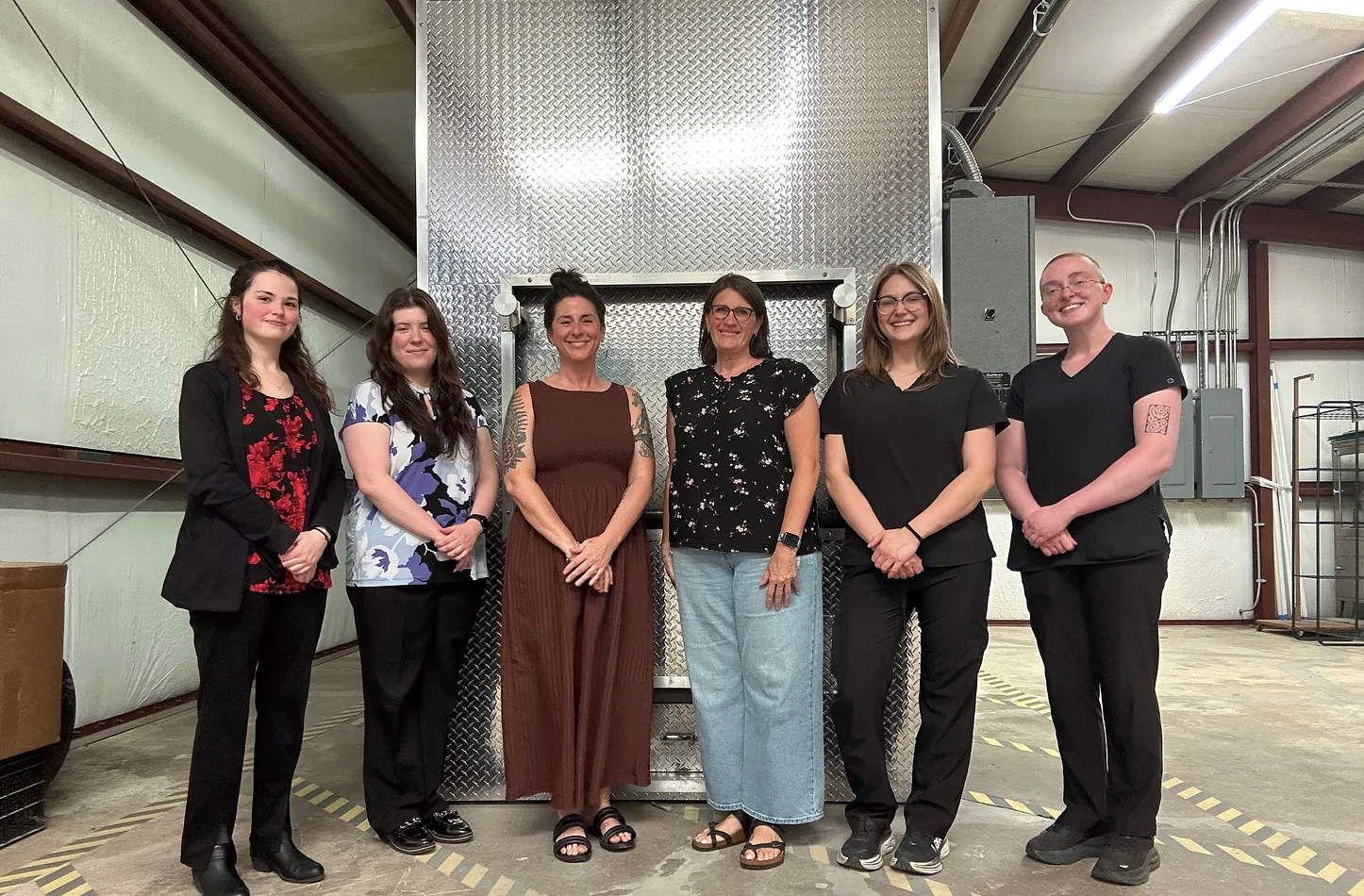
Four of Nashville’s licensed funeral directors from Crawford Funeral Services, with Jade Adgate & Heather DeWire (death doulas at Farewell Fellowship).
Free Download:
A Family Guide to the First 24 Hours After Death - What happens next, questions to ask, and how to choose a funeral home you trust.
Jade Adgate is a death doula, educator, and advocate. Through her work at Farewell Fellowship, Farewell Education, and Farewell Library, she guides others in exploring mortality and cultivating understanding, reflection, wonder, and care around life and death.