
A few years ago, I had a friend in hospice who was my age. She was a vivacious woman in her early 40s, with a flair for fashion and a belief that there could never be too much bling.
When she began to transition, I brought over my death doula toolkit to show her the tools I often used at the bedside and to ask what she’d like me to add or subtract to personalize my offering to her. This is a common way that I signal to my clients, without words, that the time for verbal communication may be drawing to a close, and to invite their guidance on how to best support them when we are communicating more energetically.
“Well, first,” she said sassily, “we’ve got to do something about that bag.” In short order, my practical canvas tote was replaced with a bedazzled, neon-adorned bag, the one I still use today. “Just because you’re a death doula doesn’t mean you have to look depressing.” And I don’t disagree.
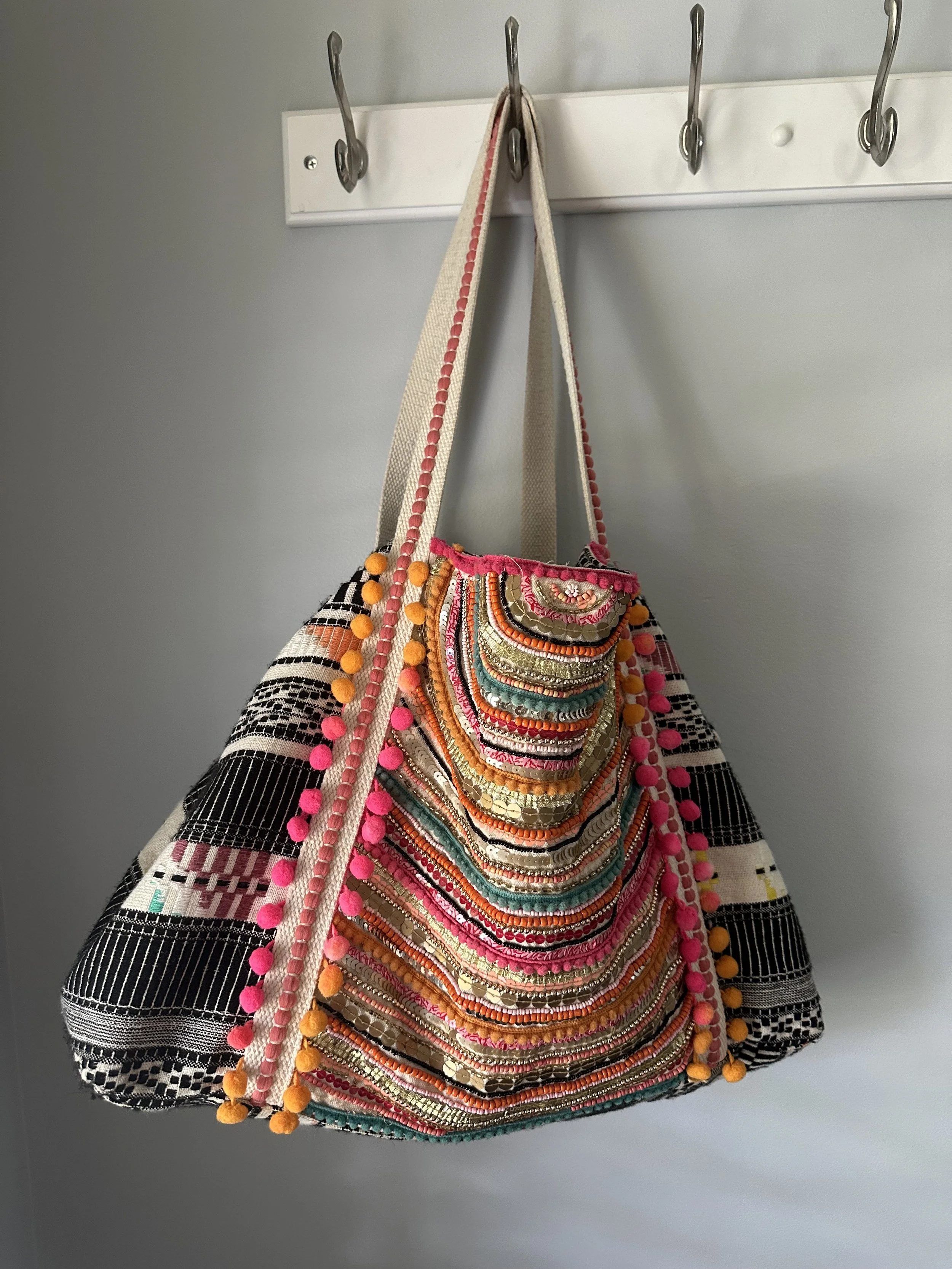
This bag lives in my car and comes with me to every client visit. But when I begin to see indications that a client is approaching the transition from the pre-active phase of dying into the active labor of the body shutting down, I take time to carefully personalize the tools inside.
I am considering the space: how it feels, where it is soothing, what might need tending. I am also keeping an eye on practical matters like hygiene, caregiver support, and family dynamics. At the same time, I am looking ahead to the moment when the spirit leaves the body, and how the family might meaningfully grieve with their hands and words in that space.
The tools inside a death doula toolkit generally fall into ten categories, which I’ll walk you through here. While every dying process is different, these tools are supportive and accessible to most vigil spaces (the last hours of someone’s life). They tend to the energetic threshold, offer practical support and education, support caregivers, and create opportunities for continued care, such as washing, blessing, or anointing the body after death.
I don’t attend the death of every single client, but I will often leave many of these tools in my stead. Because these tools are not limited to death doulas, after I walk you through them, I’ll link to a guide to help you build your own toolkit, whether for yourself, a loved one, or your own end-of-life practice.
Tool 1: Their Documented Wishes
We inevitably need to reference the documented wishes of the person who is dying. And I don’t mean the simple one-page form that hospital systems ask you to fill out before a visit; I mean a comprehensive end-of-life care plan that addresses the spiritual, social, emotional, and physical decisions surrounding their care.
In my first meeting with a new client, we discuss what values will guide this process. From there, decisions can be made with more ease.
For example, when my client Roxane identified her core value for her end of life, it was simple: no medical interventions, as natural as possible. As decisions arose, we had that clear directive to support us. We also had the precise “recipe” she left for the most supportive environment for her spirit to leave the body: a combination of sacred sound, soft lighting, essential oils, and the loving words of those closest to her. This wasn’t a time for guessing what might be meaningful. It was written and present at the bedside for us to reference.
If you are unsure whether your directives are sufficient, I suggest starting with 5 Wishes and expanding it with a vigil plan and after-death care plan.
Tool 2: Education for the Bedside
My preferred educational resources are Barbara Karnes’ pamphlets. She is a hospice nurse of over 50 years who wrote what she wanted families to know when their person is approaching death, in simple and clear language.
These pamphlets are designed to meet you in the middle of the night; there is nothing complicated or existential about them, just straightforward guidance. No matter how many times I explain the dying process, it is difficult to imagine unless you have experienced it. And every dying process is different, so we cannot cover every possibility.
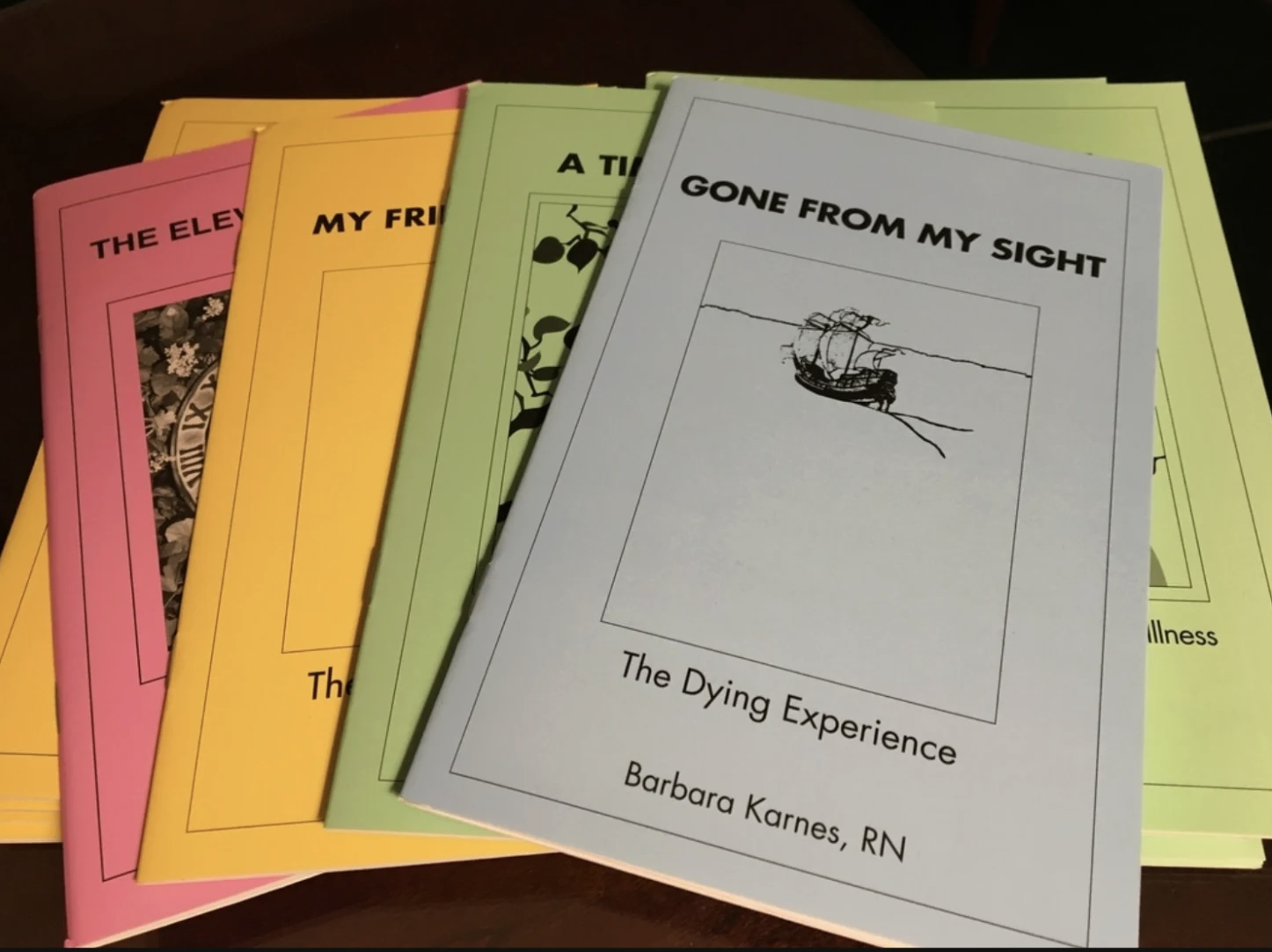
I leave the “little blue book” with every family and carry an extra in my toolkit, along with others that address pain and the final hours. Understanding does not remove grief, but it does reduce fear.
Pro-tip: I always read through the “little blue book” with the caregiver of the dying person and point out exactly what I am seeing and what I am not seeing. This is an excellent way to give them vocabulary to ask questions, communicate needs, and witness the process as it unfolds.
Tool 3: Bluetooth Speaker
Sometimes music is already playing when someone dies. But if it isn’t, or if circumstances didn’t naturally allow for it, a Bluetooth speaker becomes a powerful tool.
Recently, I was present for the death of a client, and in the moments after their last breath, the family gathered and played their favorite songs. Music became a shared way to communicate when words didn’t come easily. That playlist, created in the moment, became a sacred memory, something they can return to when they want to feel connected.
Music can also be used for guided meditations, sound healing, humming, or bells. If someone is experiencing terminal agitation, sound is often the first tool I use to bring ease into the space. It is also especially powerful for those with dementia.
Never forget: hearing is the first sense to develop in the womb and often the last to leave the body.
Tool 4: Essential Oil Diffuser (and Oils)
End-of-life care can be sacred and mysterious, but it is also deeply human, and that includes scent.
An essential oil diffuser offers multiple layers of support: aromatherapy, sacred space creation, and herbal care. Herbs have been used since the beginning of human history to tend to the dying: rosemary for transitions, pine for clearing, lavender for relaxation, peppermint for stimulation.
Diffusing oils can soften a space, cover clinical or antiseptic smells, and create an environment that feels more supportive and grounded. Scent is deeply personal, so this should always be tailored to the individual.
Not only is this tool for the person who is dying, but it also serves the caregivers well. Think of it this way: what can we do to make the space around the dying person as soothing, supportive, and inviting to their loved ones as possible? Scent is a powerful tool here.
Just remember: at the end of life, a little goes a long way.
Tool 5: Flameless Candles
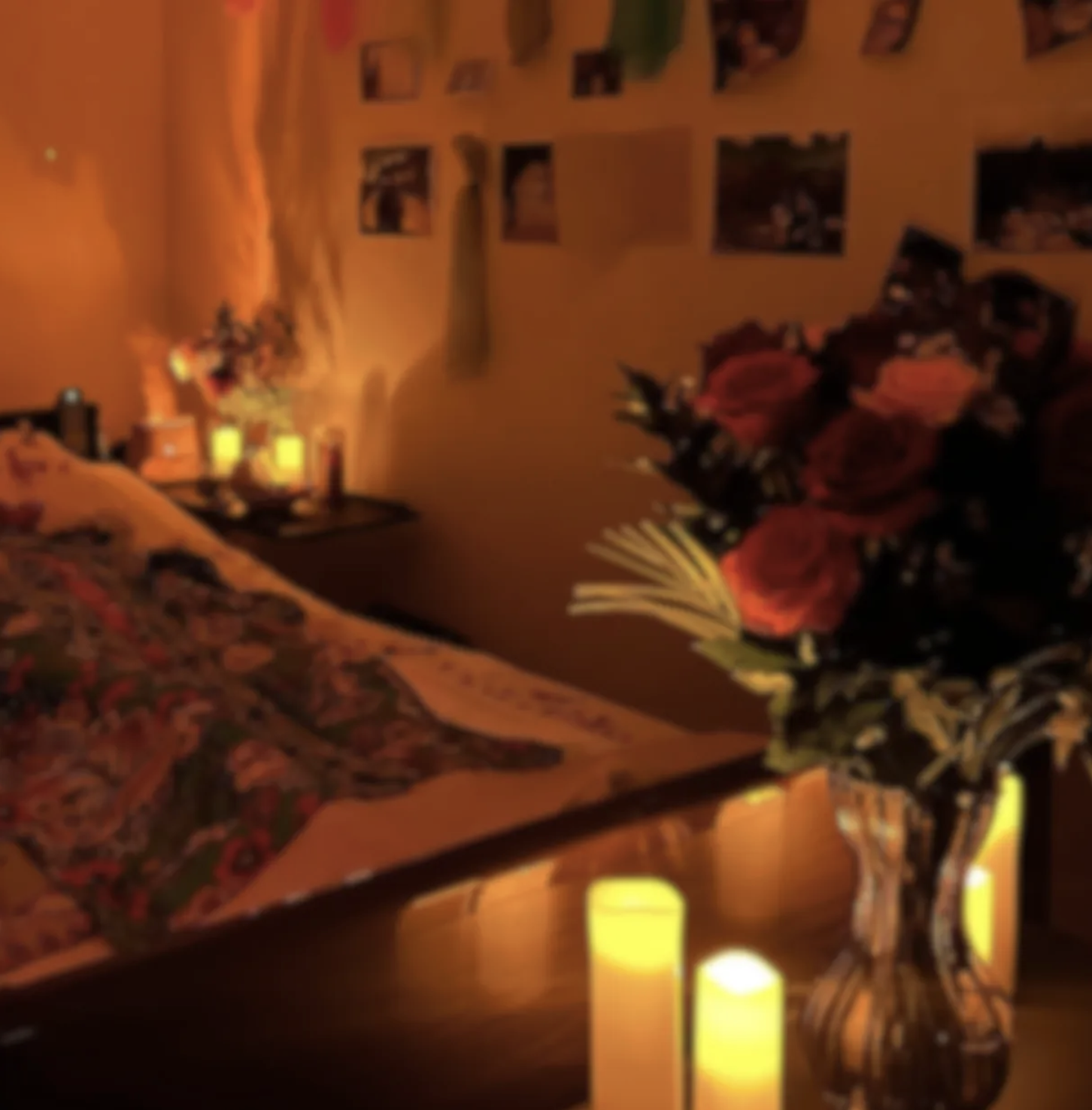
This is the tool I use most often. If I am called to a hospital room, long-term care facility, or residential hospice, a flameless candle is the fastest way to change the perception of the space. While death doulas may recognize the sacred nature of a dying environment, staff members or unfamiliar loved ones may not. Candlelight communicates that without words.
I’ve seen this not only at the bedside, but in community spaces as well. Recently, I co-hosted a grief circle in a local park. When we arrived, the shelter was full of families grilling, playing volleyball, and gathering. They were respectful when we shared that we would be hosting an event at sunset, but it wasn’t until the flameless candles came out that the entire field shifted. The energy softened. It became reverent.
I have seen the same thing in medical settings. I once supported a client in the ICU who was experiencing severe terminal agitation. Each time a staff member entered the room, the lights would be switched on, and voices lifted into a bright, clinical tone while they checked vitals and administered care.
After placing flameless candles around the room and dimming the overhead lights, everything changed. When staff entered, they lowered their voices. They moved more quietly. Some even stepped outside to document. This is the power of candlelight on the human psyche: it signifies reverence. It is also one of the safest tools to use when you do not know someone’s preferences.
Tool 6: A Book of Prayer or Blessings
We often assume we will have the perfect words when someone needs them at the end of life, but in my experience, that is a lot of pressure to place on ourselves. Last year, I visited a family in a residential hospice facility. The daughters and nieces described their loved one as deeply religious: a deacon, devoted to his faith, someone who lived his life in service to it. As I was leaving, it felt intuitive to ask if we should say a blessing together. They immediately agreed. We gathered around the bed, held hands, bowed our heads … and sat in silence. After a few moments, I looked up to find four sets of eyes on me. I was expected to lead the prayer.
This is the power of having something to reach for. For him, it was his Bible, worn and underlined at his bedside. I now carry words that can meet a range of spiritual expressions: John O’Donohue’s Book of Blessings, The Book of Common Prayer, and poetry from Rumi or Mary Oliver.
I once supported a man who often spoke about The Prophet. When he was no longer verbal, I left a copy at his bedside, and hospice volunteers read passages to him each time they visited. Not long after the final pages were read, he died. Words matter. They can hold a moment when we cannot.
Tool 7: Unscented Lotion
Physical touch is one of the most frequently used tools of a doula, though it is often the most hesitant. I originally began bringing unscented lotion for my own dry hands, as frequent washing can quickly leave skin raw, and I needed something that wouldn’t introduce an unfamiliar scent into a delicate space.
But over time, I’ve seen how often lotion becomes an invitation into care. Offering a simple hand or foot massage can gently open the door to physical connection, not only between doula and client, but among loved ones as well.
Touch can feel awkward to initiate, especially around a dying body. Lotion provides a natural entry point: something practical, simple, and deeply human. Just tending to someone’s hands or arms can soften that initial hesitation and offer real comfort. It is also something easily shared with family members, giving them a way to participate in care that feels accessible and meaningful, regardless of their experience or relationship.
Tool 8: Practical Care Tools
Most of the families I serve are supported by hospice and have access to necessary supplies, but items can run short, and additional stock is not always readily available. In my toolkit, I keep a gallon-sized bag with gloves, absorbent pads, adult diapers, and mouth swabs. Mouth swabs, in particular, are often in short supply, and many families have not been shown how to use them.
When someone is dying, consistent care to keep the body clean, dry, and comfortable is essential to preserving dignity. In the final hours, the body relaxes in ways that can be unfamiliar: mouths may remain open, breathing shifts, and dryness becomes common, especially when oxygen is in use. Moistening the mouth with a sponge and tending to the lips with ointment is one of the most intimate forms of care a doula (or loved one) can provide.
This is also one of the easiest ways to invite family members into participation. For those who may feel unsure or hesitant around the body, this gentle, periodic act of care offers a steady and meaningful role.
Tool 9: Anointing Tools
After a body has died, there is often a silence that feels vast. Marking that moment can be deeply supportive.
One way I do this is with sound: a chime, bell, or singing bowl. A single tone, allowed to reverberate through the space, can bring a sense of closure and presence, especially after an extended dying process. It signals a shift, not just physically, but energetically.
I also carry anointing oil. Frankincense, in particular, has long been used to mark transitions between this world and the next. I find that many families feel drawn to anointing their loved one’s body by placing oil on the forehead or hands as a final act of care before the body leaves the space.
These rituals do not need to be formal or prescribed. They simply offer a way to acknowledge what has occurred, to participate in the moment, and to say goodbye with intention.
Tool 10: Fresh Flowers
Like candlelight, fresh flowers signal something meaningful to us as humans. They soften a space and bring beauty into it, even at the end of life. I often bring flowers or fresh herbs to the bedside, always with consideration for the person’s preferences.
Their presence alone can shift the atmosphere, but they can also be incorporated into ritual care. Petals or leaves may be placed in water for washing the body, either during the dying process or after death has occurred.
When my client Roxane died, we used rose petals and neroli oil in the basin of water to bathe her body for the final time. After she was cleaned and dressed, her husband surrounded her with fresh flowers before she left the home. She was carried out in beauty and scent, things she had deeply loved in life. Also, the last image of her that was in the minds of her loved ones was smelling sweetly of her favorite scent and surrounded by fresh flowers.
The Most Important Tool
Ultimately, the most important tool a death doula brings is not in the bag.
It is presence.
A grounded, regulated nervous system is often what people at the end of life respond to most. The ability to remain steady, to not rush the moment, and to stay with what is unfolding, this is what allows everything else to land.
The tools we bring can support the space, expand the sense of reverence, and offer pathways for care and connection. But it is presence that holds it all together. These tools create space for nervous systems to settle by offering ease, care, and support of holistic tools that we have been using to support end-of-life since the beginning of time.
If you are preparing to accompany someone at the end of life, I suggest you consider packing your own bag. Begin by picturing the person you will serve, and choose what may be most supportive for them. These ten tools are a strong foundation, and I’ve created a free guide—Packing a Doula Toolkit—that includes a more comprehensive list to help you begin.
Because these tools are not just for death doulas. They are for anyone who wants to show up with care.
Jade Adgate is a death doula, educator, and advocate. Through her work at Farewell Fellowship, Farewell Education, and Farewell Library, she guides others in exploring mortality and cultivating understanding, reflection, wonder, and care around life and death.